Why Great Neck water damage is its own kind of job
The houses here are large, older and built well. They have full basements, finished lower levels, plaster and hardwood, built-in cabinetry and mechanical rooms that look more like a small plant than a utility closet. When water gets into a house like that, it does not stop at one room. It soaks plaster, runs down a stair and finds the media room below.
Great Neck also has a lot of apartment and co-op living near the Plaza, plus waterfront property along the Sound and the bays. Each situation brings its own risks, and a crew that treats them all the same wastes your time and your finishes.
Hills, glacial soil and the water table
Great Neck sits on the North Shore of Long Island, a landscape shaped by glaciers. The ridge-and-valley terrain is made of glacial deposits, including till, which packs sand, silt and clay together, and outwash with more sand and gravel. Water moves through those layers unevenly. In some spots it drains quickly, and in others a tight layer holds it close to the surface.
On a hillside lot the result is runoff. Rain that falls uphill finds its way down the slope and presses against the uphill foundation wall. Cellars on the lower side of a street can collect water from yards and driveways above them. Close to the water, the groundwater itself sits higher and reacts to tides and storms.
Finished basements and what they hide
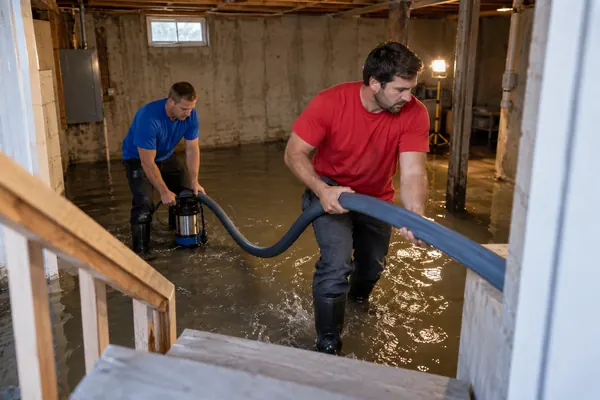
A finished lower level is the most common place we are called to in Great Neck. Carpet, drywall, built-in shelving, a bar, a gym floor, a wine room and a home theater all sit on a slab that touches the ground. When water enters through the foundation or from a failed sump pump, it soaks all of it, and the cost of drying rises quickly.
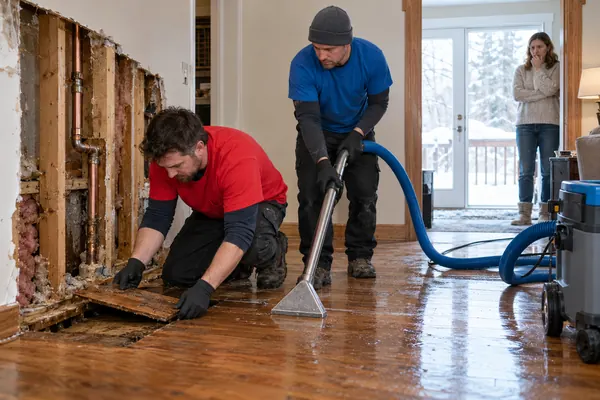
We open the base of walls to look at studs, insulation and bottom plates, and we use thermal imaging to find hidden moisture. If a floor or a wall can be dried instead of removed, we say so. Our basement flooding cleanup page walks through how we pump, strip and dry a below-grade space.
What fails most often
Larger houses mean more plumbing and longer pipe runs, and more places for things to go wrong. These are the failures we are called to again and again in town:
- Sump pumps that stop in a storm, often because of a power cut or a stuck float
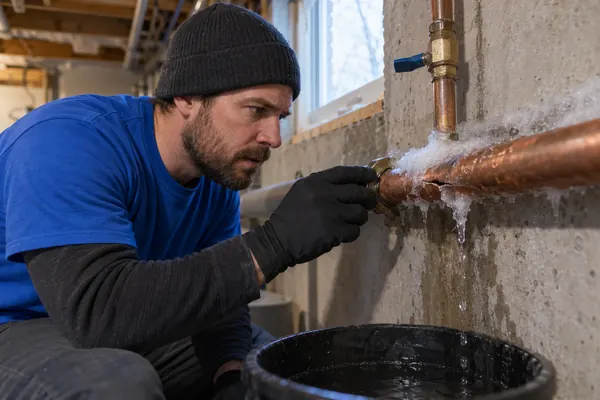
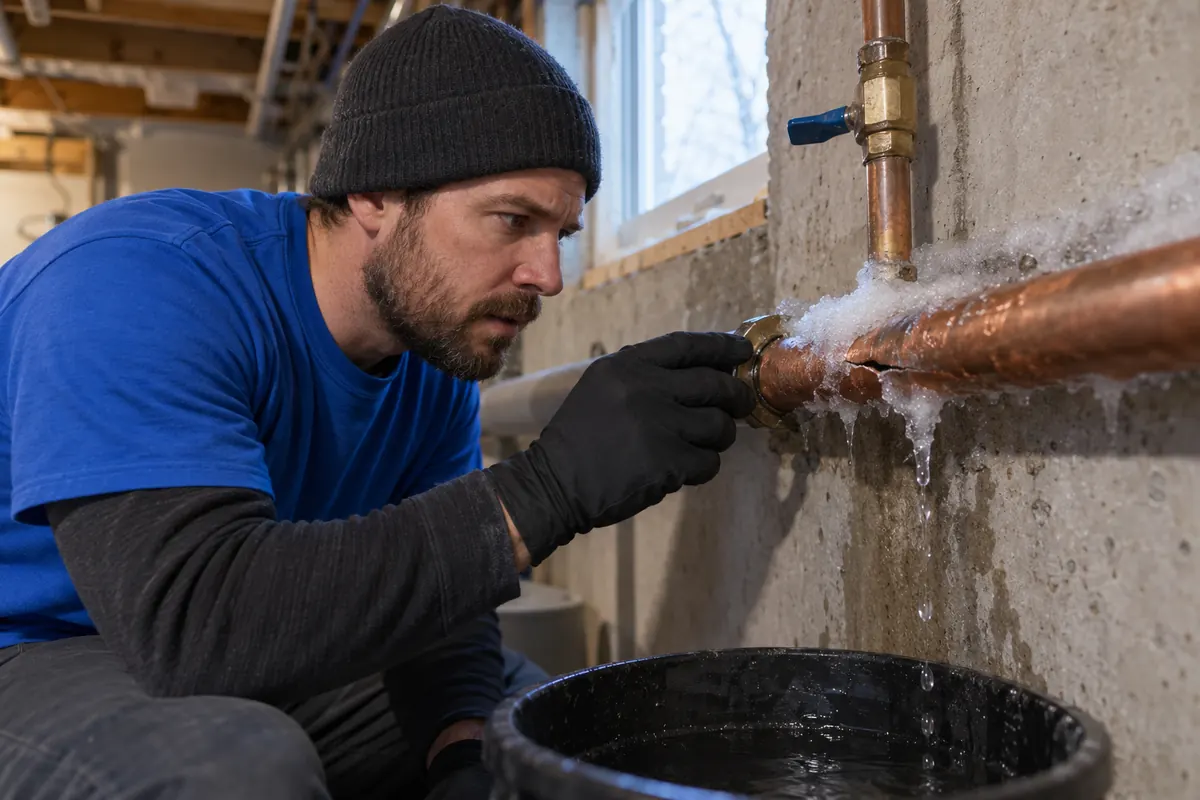
- Supply lines in exterior walls and unheated garages that freeze in a cold snap
- Water heaters and boilers in large mechanical rooms that leak for days before anyone notices
- Failed washer, dishwasher and ice-maker hoses on upper floors
- Flat or low-slope roof sections over additions and garages that leak at the seams
- Overflowing second-floor tubs or toilets that soak plaster ceilings below
Nor'easters, storm surge and the waterfront
The peninsula takes the full force of winter coastal storms. A nor'easter can bring wind-driven rain, snow and a storm tide, and waterfront streets near the bays can flood even when the rest of town stays dry. Salt water leaves a different mess than rain. It is heavy with silt and bacteria, and it corrodes metal and wiring faster than fresh water does.
After a coastal flood, speed matters. We pump, shovel out silt, strip what cannot be cleaned and dry the structure. Our storm and flash flood damage restoration page covers the details.
Winter, vacancies and second homes
Many Great Neck homes sit empty for a week or more in winter while the family travels. The heat can fail, a pipe can split in an exterior wall and nobody knows until a neighbor sees water at the door. A large house can take on thousands of gallons in that time, and the loss reaches every floor.
The fix is boring and works: keep the heat on at 60 or higher, shut off the main if you are going to be gone for more than a few days and ask someone to look in. Our post on keeping pipes from freezing in a Queens cold snap has a full checklist, and the same advice applies across the border in Nassau.
Valuable things and careful drying
People in Great Neck often have art, rugs, instruments, books and wine that cannot be replaced. We carry out contents with care and keep a list of what we move. Oriental rugs, antique wood and good millwork are not thrown away by reflex. They are dried slowly, with drying mats, low heat and readings every day, and a specialist may be called in for items we cannot treat.
Tell us on the phone what is at risk and where it is. We will protect it first and then deal with the rest of the loss.
Apartments, co-ops and the Plaza
Near Great Neck Plaza and along the main roads, many people live in apartments and co-ops. A leak there reaches several units, the hallway and sometimes a garage below. The building usually has a manager and a board, and the work has to be scheduled around elevators, quiet hours and access rules.
We give the manager a plain schedule, keep hoses and cords out of halls and exits, and write a separate record for each affected unit. Our apartment and multi-unit water damage page describes how that works.
Mold in large, closed-up houses
Big houses hold humidity in rooms that nobody uses every day. A lower-level media room, a wine cellar or a guest suite over a garage can stay damp for weeks after a small leak without anyone noticing. By the time the smell arrives, growth may be behind the wall finish.
We find the moisture first, then contain the area, remove what is infested and dry the space. Because finishes are expensive, we open as little as we can and show you the readings that justify each cut.
Before the next storm: a Great Neck checklist
Coastal storms and hillside runoff give you some warning. Use it:
- Test the sump pump and check that the discharge line runs clear and away from the house
- Move valuables and files off lower-level floors
- Clear leaves from gutters, window wells and the drains on a hillside driveway
- Know where the main shutoff is and make sure everyone in the house can find it
- If you travel in winter, set the heat to 60 or above and ask someone to check the house
- Photograph each room, the mechanical room and your valuables for your insurer
Insurance and getting started
Homeowners in this area often carry larger policies with their own endorsements. Ask your agent about water backup coverage and flood coverage before a storm, since both are commonly separate from a base policy. Our post on homeowners insurance and water damage in New York lists the questions to ask.
If you have water in the house now, call. We will tell you what to shut off, send a crew and begin the record your insurer will want.
Water damage restoration cost in Great Neck, NY
Great Neck homes are larger and more finished than the average, so jobs run higher. These are typical estimates for Nassau County and the New York City area, not guaranteed prices. Plumbing repairs and rebuilding are separate. Call for an exact quote.
| Job type | Typical estimate |
|---|---|
| Appliance or fixture leak, one or two rooms | $1,200–$4,000 |
| Burst pipe affecting several rooms and a lower level | $4,000–$12,000 |
| Finished basement flood, clean or gray water | $5,000–$16,000 |
| Sewage backup in a finished lower level | $6,000–$20,000+ |
| Waterfront storm flooding, one floor | $6,000–$22,000 |
| Mold removal with containment, finished space | $3,000–$12,000 |
| Large house with several floors affected | $12,000–$40,000+ |
Questions we hear in Great Neck
Do you travel to Great Neck from Queens?
Yes. Great Neck is a short drive from our East Elmhurst office, and the emergency line covers Nassau County as well. Tell us the address and we will give an honest arrival time.
Can you protect antique floors and furniture?
We dry hardwood and antique pieces slowly with drying mats and daily readings, and we move contents with care. We say up front when something cannot be saved.
What if my house is empty and a pipe burst?
Close the main if you can reach it safely, and call. We will arrange access with a neighbor or key holder and begin extraction and drying.
Does a storm tide leave salt behind?
Coastal floodwater can leave salt and silt that harm metal and wiring. We clean and dry fully, and an electrician should check wiring that was submerged.
Is my sump pump enough?
Not always. Pumps fail in power cuts, and a backup battery or a second pump gives more margin. A plumber can advise. We clean up if water still gets in.
Read next Going Away This Winter? What Happens to a Pipe Left Alone.