What counts as an emergency here
Plenty of drips can wait until morning. These cannot:
- Water crossing a floor and heading for the next room or the stairs
- A ceiling that bows, bulges or rains on you from the apartment above
- A pipe in the wall that will not stop running, with no shutoff in reach
- Brown water rising through a cellar floor drain, a basement toilet or a laundry sink
- Water near the meter, the panel or a boiler that is still running
- A steam or hot-water radiator line that has let go
The first hours on site
Look before touching
We walk in checking for energized outlets, a wet panel, a bowed ceiling and slick stairs. If the panel is in water, we stop and the utility or an electrician comes first.
Shut the source
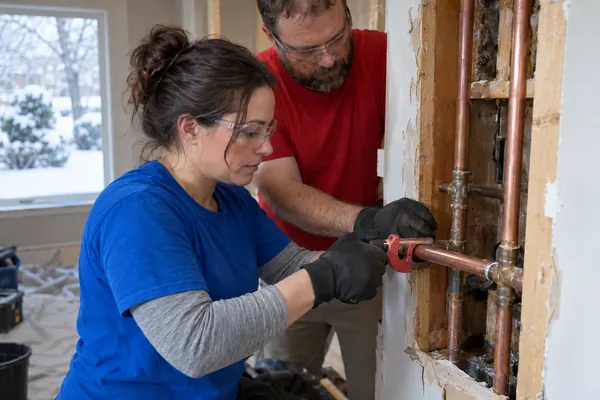
We close the nearest valve, the main or the building's riser so no new water arrives while we work.
Name the water
Clean, gray or contaminated? That call decides whether the crew wears suits and what happens to carpet, pad and drywall.
Pull the standing water
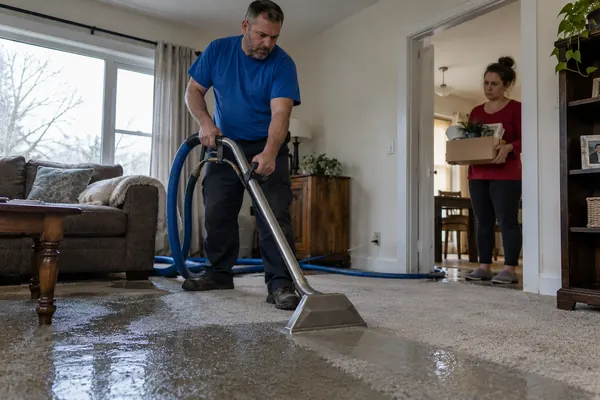
Submersible pumps handle cellar depth. Wand extractors work carpet and hardwood on the floors above.
Move what matters
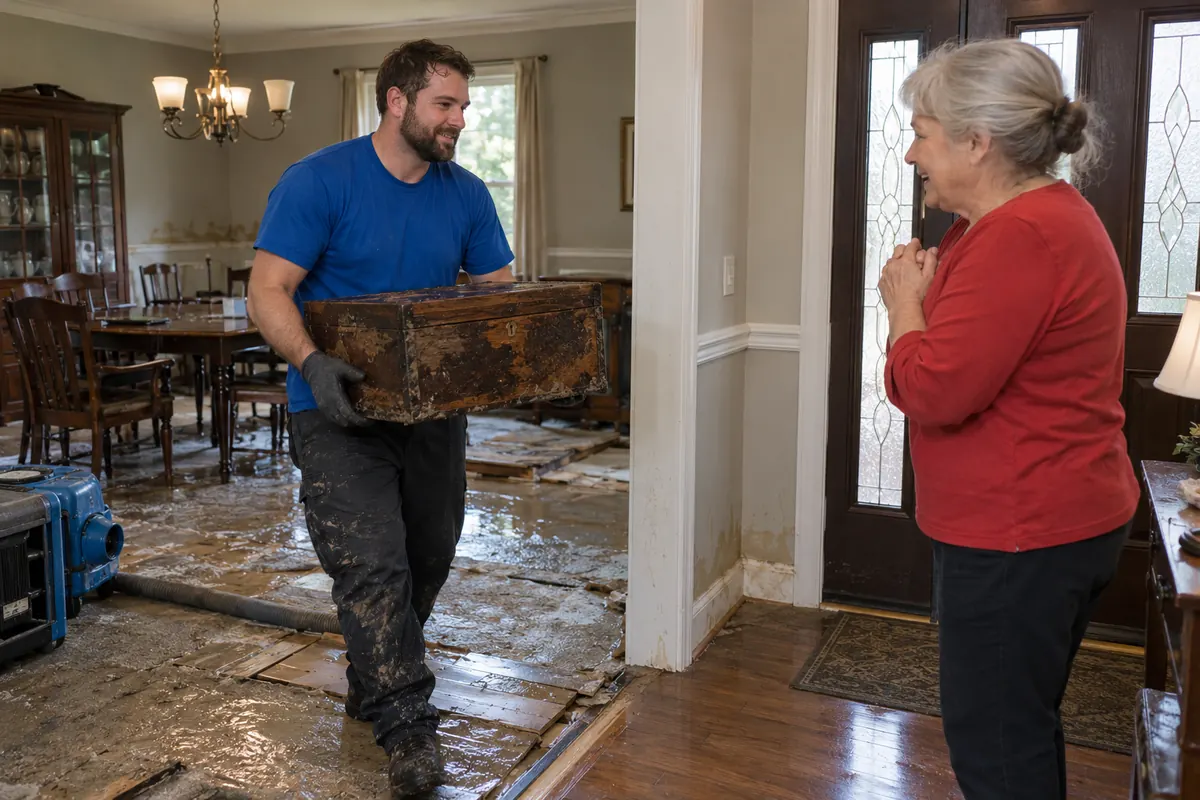
Rugs, electronics, photo boxes and papers go to a dry room. Heavy furniture is blocked up off wet floors.
Start the drying and the paper trail
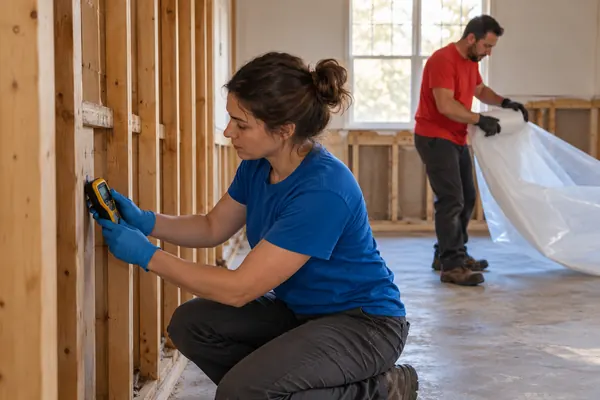
Air movers and dehumidifiers go in, moisture readings are logged on the first visit, and photos start the file for your adjuster.
Problems we run into most
- Water that has already reached a lower floor or cellar
- Homeowners who waited until morning and found it spread
- Wet carpet pad glued down over a slab
- Breakers or outlets sitting in the wet area
Why a small leak turns big in East Elmhurst
Most houses on these blocks are brick or frame two-families with a cellar underneath. Water that starts on the second floor drops through the joist bays, lands on the first-floor ceiling, then pours into the cellar, where it meets the boiler, the panel and whatever is stored on the floor.
The other kind of emergency comes from outside. When a cloudburst fills the street and the sewer, water pushes back up the lowest drain in the house, and the street itself runs down any driveway that slopes to a garage. Both can start in minutes, and both need pumps before they need a plan.
Why the first hour is the one that counts
In an older Queens house, water takes about ten minutes to go from a floor into the baseboard and about an hour to reach the plaster and the cellar ceiling. Every step adds material that has to be cut out later, so a quick call saves real money.
Tell us if the building was shut up and humid, if the carpet pad feels soft or if the radiators were running when it happened. Mention anyone who relies on medical equipment that needs power. We plan the crew, the pumps and the order of work around those details.
Before we arrive
- Close the main valve, usually on the cellar wall by the meter. In a building, ask the super to close the riser
- Stay out of any water that reaches outlets, the panel or an electric boiler
- Carry rugs, shoes and boxes up out of the wet room
- Film each wet room and the source before anything is moved
- Keep children and pets away from the water and from sagging ceilings
- Leave the household vacuum in the closet. It is not built for water
What an emergency call usually costs in East Elmhurst
A typical estimate for emergency restoration in the New York City area runs about $1,800 to $7,500. It climbs with the number of rooms, how long the water sat, and whether it came in clean or dirty. Night and weekend calls can add to the labor. These are typical estimates, not guaranteed prices. Call for an exact quote. See all price ranges.
Questions we hear about this
Do you really pick up at night?
Yes. Emergency services are available 24/7, nights, weekends and holidays. The office is staffed Monday to Friday, 8 AM to 6 PM, for scheduling and questions.
How long will the equipment stay?
Most houses need three to five days. Brick and plaster can take longer. We read the walls on each visit and pull machines when the numbers match dry material.
Will insurance cover it?
A sudden pipe, hose or water heater failure is often covered. Water from the sewer or from a street flood usually falls under an endorsement or a separate policy, so ask your agent early.
Can we sleep in the house during drying?
Often yes when the water was clean and the electrical is safe. After sewage, or in a house with a wet panel, we may ask you to stay elsewhere.
Where will the truck park?
Tell us about stoop access, narrow driveways and street parking when you call. We plan hoses and cords around it so the sidewalk stays clear.
Read next Not sure what to say when you call? Read what to tell a water damage company.