How floor water travels in Queens houses
Many East Elmhurst homes have wood floors over joists, with a cellar beneath. A flooded kitchen does not stay in the kitchen. The water finds the gaps at the radiator pipes and the baseboard and reaches the cellar ceiling, often within an hour.
Narrow row-house layouts help it along. A hallway that runs the length of the house is a chute, and every doorway is a step to the next room. We trace where the water actually went, then extract from there, not just from where it showed up.
When a mop is not enough
A towel handles a spill. Call us if you see:
- Carpet that squelches underfoot or a pad that feels like a sponge
- A pool in a low corner of a room that keeps refilling
- Oak floorboards lifting at the seams or cupping across the room
- Water that slid under a door into a hall, a closet or the next apartment
- Wet footprints on the stairs down to the cellar
- A sour, damp smell that shows up a day after a spill
What goes wrong on extraction jobs
- Water trapped under click-lock flooring
- Pad stapled or glued so it comes up in pieces
- Water that crossed into a closet or adjoining room
- Furniture stain bleeding onto wet carpet
How an extraction job goes
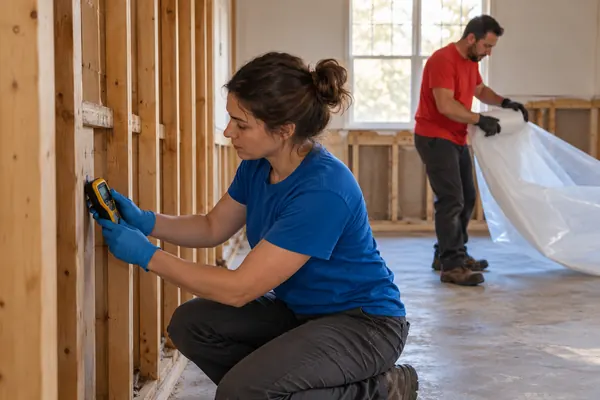
Trace the edge
A moisture meter along the baseboards and a thermal camera across the floor show how far the water spread before any machine runs.
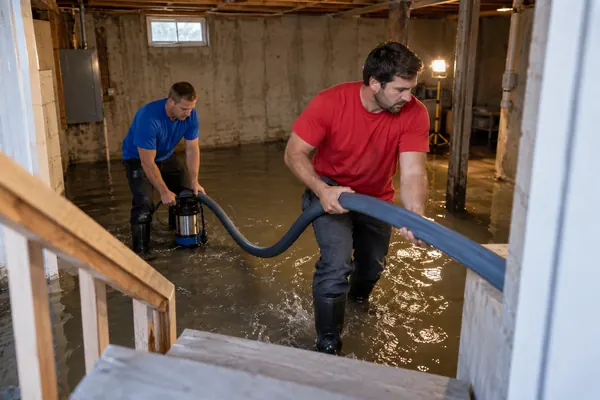
Pump the depth
Anything over an inch goes to a submersible pump first, including water standing above a cellar drain.
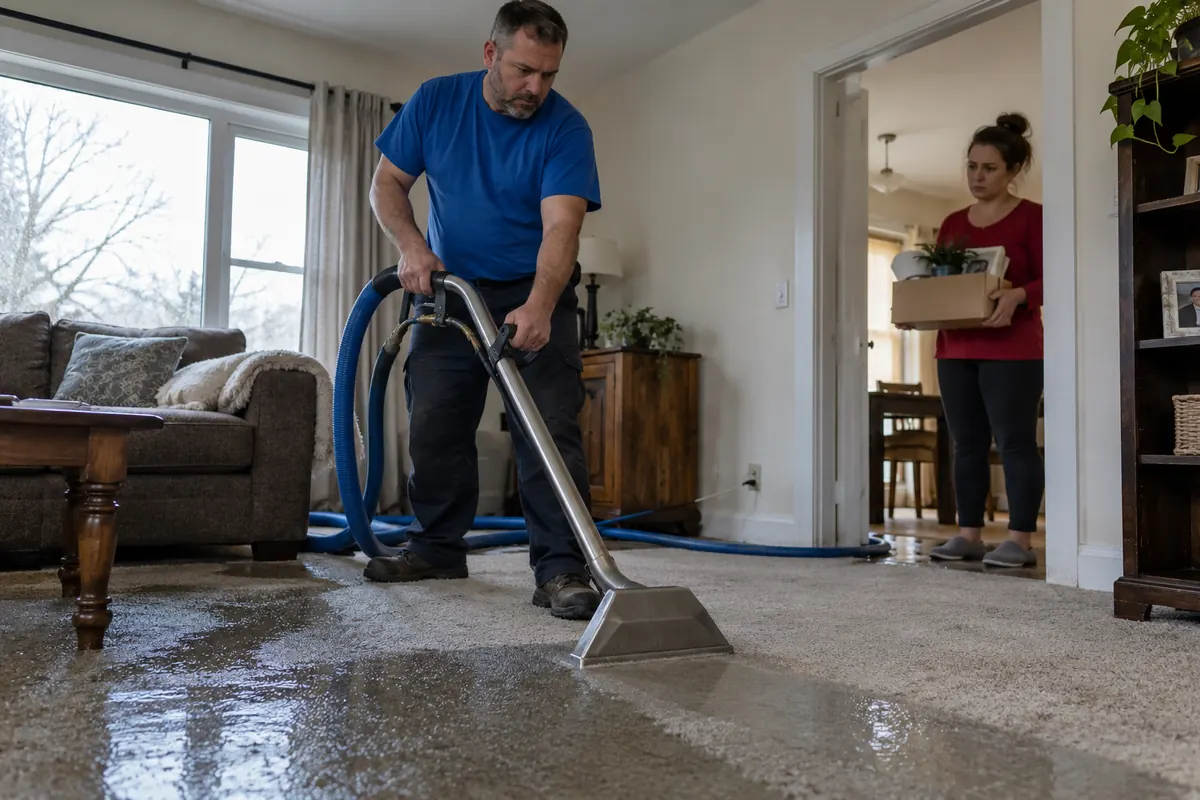
Work the carpet
A weighted wand pulls water through the fiber. If the pad is soaked, we lift the carpet, cut out the pad and extract the floor beneath.
Treat the hard floors
Tile, vinyl and sealed wood get slow, low suction along the seams, where water hides.
Release the baseboards
Small relief holes or a lifted baseboard let wall bases drain and breathe.
Hand off to drying
When no free water is left, air movers and dehumidifiers take over and the readings go in the log.
While you wait
- Keep your feet out of water that touches outlets or power strips
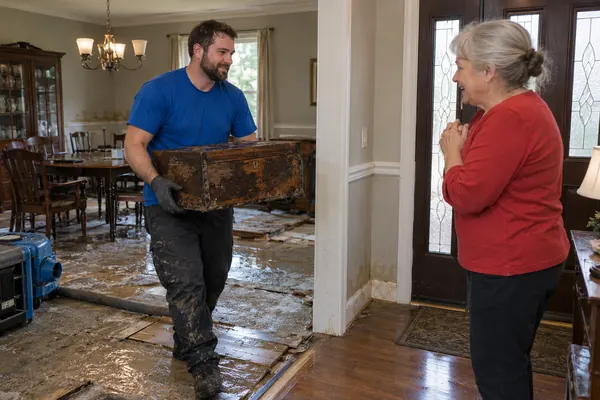
- Lift area rugs, shoes and cardboard boxes onto a dry surface
- Peel back a rug corner only if the floor underneath is not slippery
- Skip the household vacuum on wet floors
- Keep windows shut when it is humid outside
- Photograph the water line on baseboards and furniture legs
Oak, tile and carpet: three floors, three methods
Carpet gets a weighted extractor and the pad usually goes. Tile extracts fast, but water settles in grout lines and under tile edges. Oak floors, common in older East Elmhurst houses, are the delicate ones: boards drink from the underside and keep swelling for days, so we pull moisture from the seams with slow, steady suction rather than dragging a wand across the top.
Laminate and engineered boards swell at the edges and can come apart fast. If you have either, say so on the phone and we will plan for it.
Typical extraction pricing in East Elmhurst
Extraction alone often lands between $800 and $3,500 as a typical estimate for the New York City area. Deep water, large rooms and carpet pad removal push it up. A shallow spill on tile sits at the low end. These are not guaranteed prices. Call for an exact quote. See all price ranges.
Questions we hear about this
Can wet carpet be saved?
Often, when the water was clean and we start within about a day. The pad underneath almost never can, and we replace it.
What about old oak floors?
Oak can be saved more often than people expect, with gentle suction and drying mats. Boards that have already cupped hard are another story, and we say so.
When is a shop vac enough?
For a thin spill on one floor. Once the water is more than a few feet across or deeper than a thumb's width, an extractor and a dehumidifier do the job.
Is extraction the same as drying?
No. Extraction takes off the free water. Drying removes what soaked into wood, plaster and masonry, and that takes days.
What if the water smells like a drain?
Treat it as contaminated. Stay out, call us, and we will bring protective gear and handle disposal.