A village built in the early twentieth century
Floral Park grew up around the railroad, and much of its housing dates from the 1920s through the 1950s: brick colonials, Tudors, Cape Cods and well-kept two-families, laid out on a grid around the village center and the Tulip Avenue and Jericho Turnpike corridors. Many of these houses have full cellars, original plumbing and mature trees in the front yard.
Age matters for water damage. Pipes, drains and water heaters in houses that old are on their second or third life, and the underground lines outside have been in the ground for close to a century in some places.
Soil and the water table
Floral Park sits on the Hempstead Plains, a broad outwash plain of sand and gravel with silt layers, deposited as the glaciers melted. In general, the ground drains well, and that is the reason the village has relatively few chronic standing-water problems compared with the lowest parts of Queens.
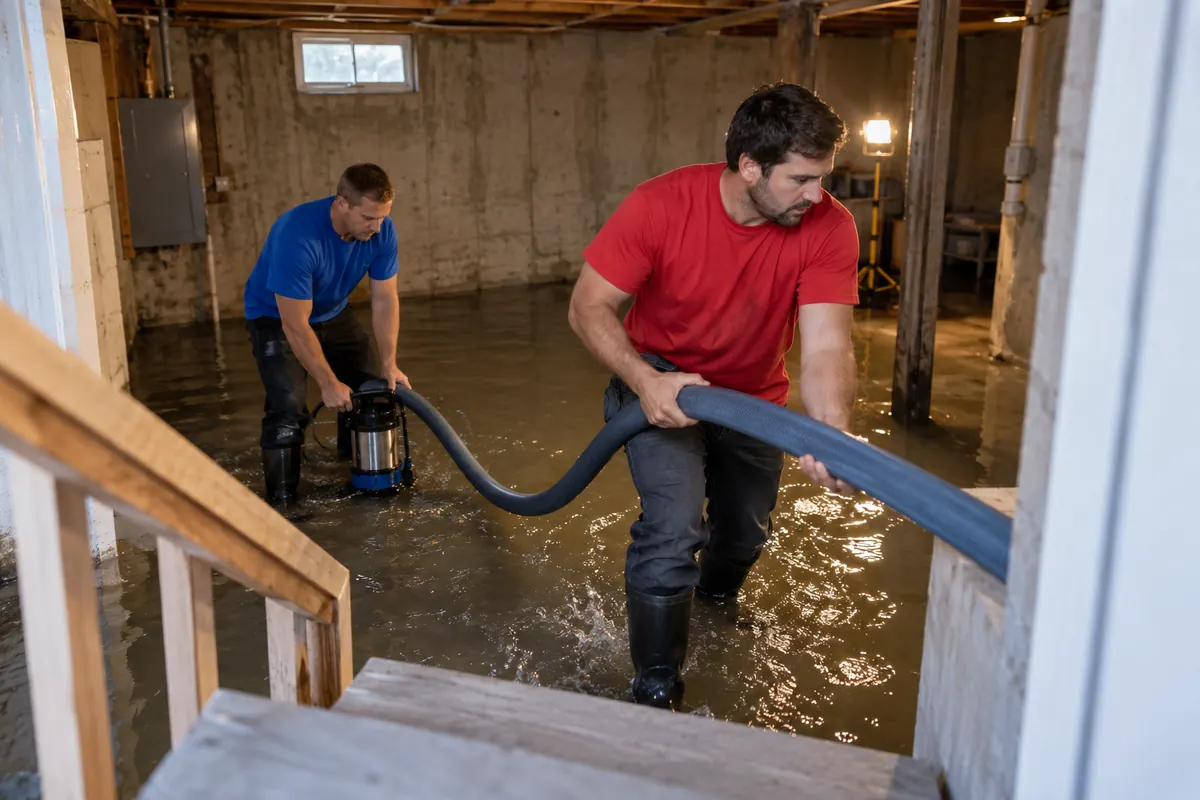
Well-drained ground does not make a cellar immune. After a long rain the water table rises, a layer of tighter silt can hold water near the foundation, and the mortar joints in old block and brick walls give way under that pressure. We see damp walls, wet corners and floor-wall joints that leak in a wet spring, even where the street never floods.
Tree roots and sewer laterals
The tree-lined streets that make Floral Park attractive are hard on underground pipes. Roots find the joints in old clay or cast iron sewer laterals, grow into them and slow the flow. A line half full of roots may work for years and then back up the first time a heavy rain or a long shower fills it.
When the lateral clogs, wastewater has nowhere to go but up the lowest drain, usually in the cellar. That is a sewage loss, and it is handled with protective gear, removal of porous materials and disinfecting. Our sewage backup cleanup page explains each step. A plumber can scope the line with a camera to see what is in it.
Cellars with a past
Floral Park cellars often carry the marks of earlier remodels: a paneled rec room from the sixties, a laundry corner, a bathroom added in the eighties. Old paneling and carpet over a slab hide moisture, and a small leak can feed mold behind them for months.
When we open a wall in a cellar like this, we often find the signs of repeated small water events: efflorescence on block, rusted nail heads, stained sill plates. Our mold remediation work always starts by finding where the moisture comes from.
What goes wrong most often
These are the calls we answer most from the village and the streets around it:
- Sewer laterals blocked by roots or broken by age
- Outdoor hose bibs that froze in winter and split inside the wall
- Sump pump discharge lines that froze at the outlet and sent water back into the pit
- Water heaters in cellar corners that rust through
- Washer hoses that burst on a first-floor laundry
- Ice dams and roof leaks over older, thinly insulated attics
Winter in the village
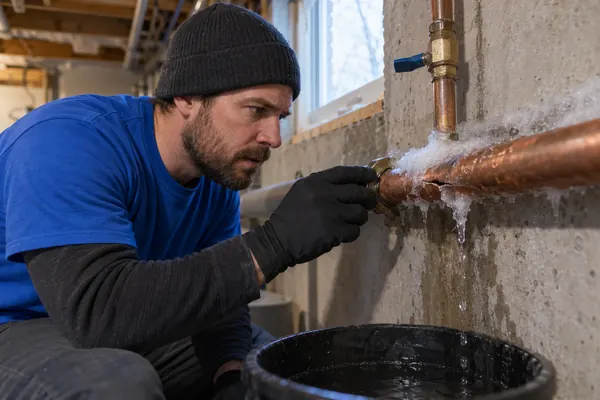
Hard freezes put real pressure on older plumbing. An outdoor spigot left connected to a hose traps water that freezes and splits the pipe behind the wall. Nothing leaks until spring, when the water is turned on and sprays into the cellar ceiling. Sump pump discharge lines that exit above ground can freeze solid, and a pump that cannot discharge will overflow or run until it burns out.
If you find a split pipe, shut the main, drain the lines and call a plumber and us. Our post on keeping pipes from freezing in a Queens cold snap lists the simple steps that avoid most of these calls, and the same steps work in Nassau County.
Insurance, permits and village rules
Check your policy for sewer backup coverage and sump pump overflow coverage. Both are usually added as endorsements. If a job involves opening walls or replacing plumbing, ask your plumber or contractor whether the village or county requires a permit. We handle cleanup and drying, and we keep records you can hand to your insurer and your contractor.
Shops, small offices and apartments along the main roads
Away from the quiet residential blocks, the village has shops, restaurants, offices and apartment buildings along Tulip Avenue, Jericho Turnpike and the streets near the station. Many are older one- and two-story buildings with a cellar stock room and a flat roof, and they share walls with the business next door.
A ceiling leak in a shop or a flooded back room costs money every hour it stays wet. We isolate the wet zone, dry it in phases and keep the counter open where we can. For buildings with tenants above a store, we keep a record for each unit so the owner and every insurer see the same facts.
Mold in older village cellars
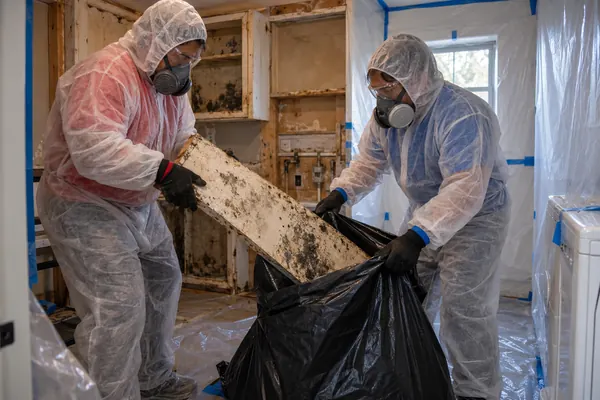
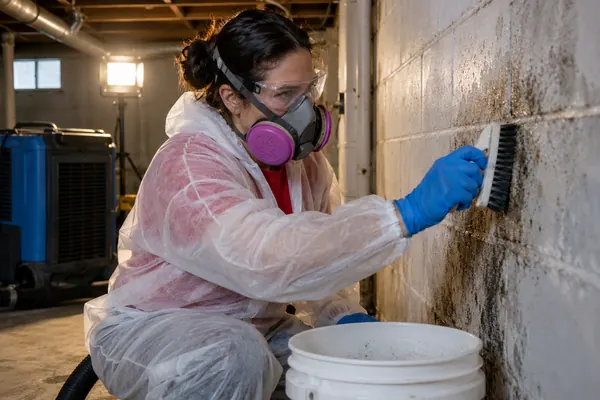
Old cellars in Floral Park hold a lot of history, including past leaks that were only partly dried. Paneling, carpet and stored cardboard sit against masonry that stays cool and damp, and mold can grow out of sight. When we open a wall during a water job, we sometimes find growth from an earlier event.
We contain the area, remove infested material, clean the framing and dry the space, then show you the readings. Our mold remediation page lists each step.
Before the next storm: a Floral Park checklist
Older houses reward a little prevention. Before the next hard rain or freeze:
- Have a plumber scope the sewer lateral if you have large trees in the yard
- Test the sump pump and make sure the discharge line is not buried in snow or frozen at the outlet
- Disconnect hoses and shut off the interior valve to outdoor spigots before winter
- Replace rubber washer hoses with braided steel ones
- Lift boxes and valuables off the cellar floor
- Photograph each room and keep a copy of your policy where you can reach it
Reaching Floral Park
Floral Park is a few minutes from the Queens line, close to our East Elmhurst office. When you call, give the street, the cross street and whether there is a driveway or on-street parking. We bring pumps, extractors and drying equipment sized to the house, and we call ahead if traffic on Jericho Turnpike or the parkways slows us down.
Water damage restoration cost in Floral Park, NY
These are typical estimates for Nassau County and the New York City area, not guaranteed prices. Plumbing repairs, sewer line work and rebuilding are separate. Call for an exact quote.
| Job type | Typical estimate |
|---|---|
| Washer or water heater leak, one room | $1,000–$3,500 |
| Frozen hose bib or burst pipe, two or three rooms | $2,500–$8,000 |
| Cellar water from a failed sump or heavy rain | $3,000–$10,000 |
| Sewer lateral backup in a cellar | $4,000–$14,000+ |
| Ice dam ceiling leak and wet insulation | $1,500–$6,000 |
| Mold removal with containment, one area | $2,000–$7,500 |
| Finished cellar flood with paneling and carpet | $5,000–$15,000 |
Questions we hear in Floral Park
Why does my Floral Park cellar back up when it is not flooding outside?
A root-clogged or broken sewer lateral can back up in ordinary use or a heavy rain. A plumber can scope the line. We clean the contaminated area.
Do tree roots really cause that much trouble?
Yes. Roots find joints in old clay and cast iron lines and grow into them. A line can work for years and then block all at once.
My outdoor faucet froze. Do I need a crew?
If water came into the wall or the cellar ceiling when it thawed, yes. Close the main, call a plumber and call us to dry the wall and ceiling.
Can you dry old plaster and paneling?
Often, yes, with moisture readings and patience. We remove what cannot be saved and tell you what can stay.
Is sump overflow covered by insurance?
Not by default. It commonly needs an endorsement. Ask your agent what yours says.
Read next A Pipe Just Burst. What Do You Do in the First 60 Minutes?.