Why East Elmhurst commercial buildings take big hits
The commercial strips along Astoria Boulevard and Northern Boulevard are lined with storefronts, restaurants, auto shops, offices and small medical practices. Many sit in older one- and two-story buildings with flat roofs and basements below the street, so a clogged roof drain or a street flood puts water in two places at once.
Businesses that serve LaGuardia Airport, from hotels to freight and service shops, add 24-hour operations and tight schedules. A shared wall or ceiling carries water to the unit next door, and the cold winter air makes a frozen sprinkler or supply line a real risk in unheated back rooms.
What commercial water loss looks like
Business losses rarely start as one clean puddle. In East Elmhurst buildings we usually see:
- Ceiling tiles stained, sagging or dropping in office suites
- Water pooling under a restaurant kitchen line or a dish station
- Carpet tile lifting or smelling musty in a retail space
- A sprinkler, fire-line or rooftop unit leak that wets several suites
- Stock on the bottom shelves wicking moisture up from a wet floor
- A rooftop HVAC unit dripping condensate through the ceiling below
Restaurants and commercial kitchens in East Elmhurst
A kitchen is full of water on a normal day, which is why a loss hides so well. Dish machines, prep sinks, ice machines and walk-in coolers all sit over floor drains and slab joints. When a line fails or a drain backs up, water spreads under equipment and behind cove base before anyone sees it, and the floor stays wet under rubber mats long after the surface looks fine.
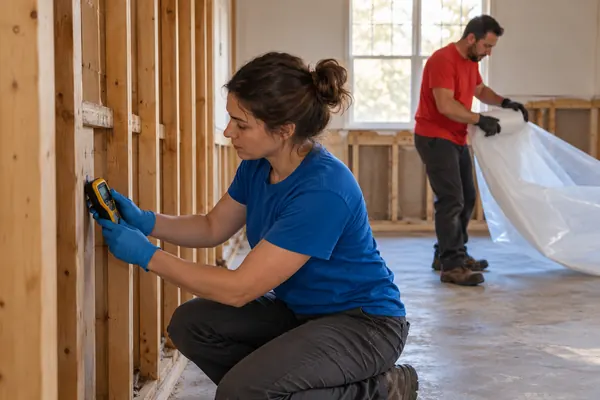
Our crew pumps first, then lifts mats and moves what can be moved, and checks the slab, the wall bases and the coolers' door frames with a meter. We plan drying around your prep schedule so the dining room can open while the back of the house is isolated. A health inspector will want to see the kitchen clean and dry, so we document readings and finish before the space is released.
- Floor drains that back up in a downpour or when a lateral clogs
- Dish machine and prep sink lines that leak behind equipment
- Walk-in cooler condensate that soaks flooring and wall bases
- Grease and food debris carried across the floor by contaminated water
- Rooftop exhaust and HVAC drain lines that drip through ceilings
How a commercial job runs
Walk it with the manager
We go through every wet suite, stock room and hallway, sketch where the water went and agree on phases before machines go in.
Protect the open space
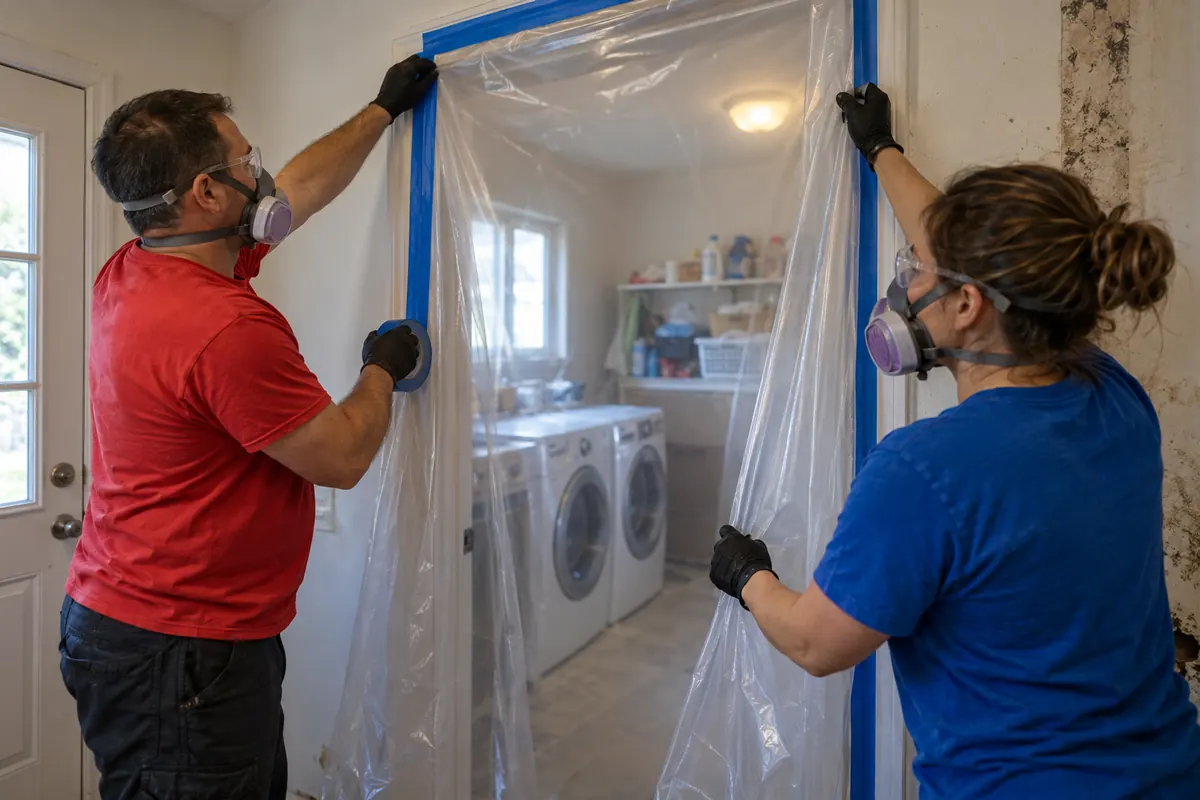
Plastic containment and routed hoses keep the sales floor, the front counter and the entrance usable while the wet zone is worked.
Pump and strip
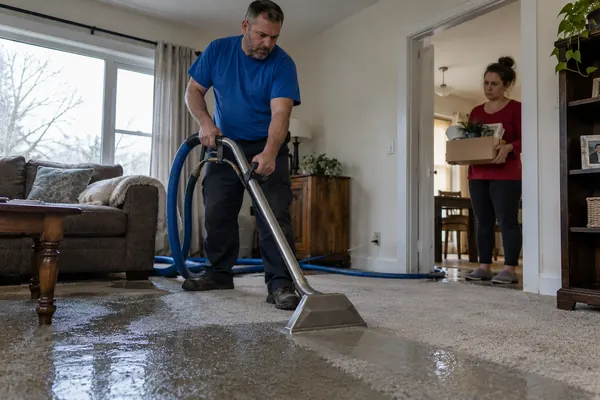
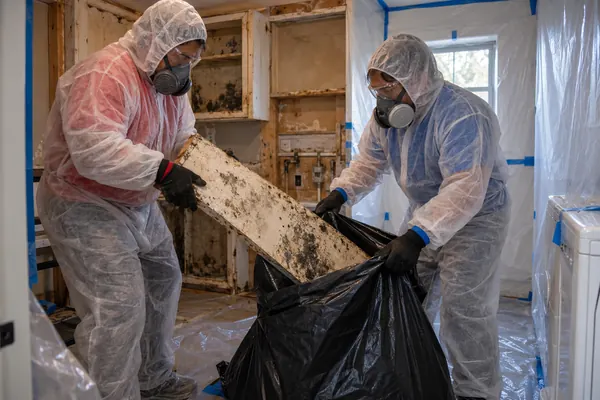
Truck-mounted units and high-volume pumps clear floors fast. Wet carpet tile, pad, ceiling tile and cardboard stock come out.
Dry the whole floor plate
Industrial air movers, low-grain refrigerant dehumidifiers and desiccant units dry slab, walls and ceiling evenly.
Report daily
Room-by-room readings and a short status go to the owner, the tenants and the insurer each day.
Hand over the file
Photos, equipment logs and a written scope are packaged for your carrier or risk manager.
Retail storefronts and cellar stock rooms
Shops along Astoria Boulevard and Northern Boulevard often sell from the first floor and store from the cellar. That cellar has a floor drain, a sump or nothing at all, and it is the first place a cloudburst or a backed-up main shows up. Cardboard, fabric and paper stock soak up water and mold within days.
We pump the cellar in stages, sort stock into salvageable and not, and photograph what we remove for your insurer. Shelving is raised onto blocks while the floor dries, and the sales floor stays protected with plastic and clean walkways. If an inventory count is needed for a claim, we can help you list what was lost.
Issues we see on big-building jobs in East Elmhurst
- Water crossing a shared wall into the next tenant
- Basement stock rooms that flooded before anyone opened up
- Access limits at secured suites and rear entrances
- Inventory and records that were wet before anyone arrived
- Unclear who in a multi-tenant building approves the work
Large-loss drying equipment for big floors
A storefront or a restaurant floor needs more than a handful of fans. We stage high-volume air movers in rows, run desiccant dehumidifiers with ducting into the building, and use truck-mounted extraction on wide-open floors.
In multi-tenant buildings we draw a map of equipment and cords so nobody trips on them, and we tag each machine with the suite it serves. That also makes the insurance paperwork easier to match up.
Offices, salons and medical suites
Small offices and salons are tight spaces with a lot of equipment, and water damage here is as much about records, chairs and machines as it is about floors. A leaking rooftop unit, a flat roof drain or a burst line in a suite above can drop water on desks, computers, stylist stations and treatment rooms.
We lift ceiling tile, move and cover equipment, extract carpet tile and dry the plenum and walls. For medical and personal-care suites, we keep dust and moisture contained and tell you what needs sanitizing before you see clients again. Daily readings and photos give you what you need for the landlord and the insurer.
Mixed-use buildings: the store below, the apartments above
A common East Elmhurst building has a shop on the ground floor and one or two apartments above, with a shared roof, shared stacks and a cellar under all of it. A leak in the apartment bathroom reaches the ceiling of the store. A flooded cellar affects the boiler that heats everyone.
These jobs involve an owner, a business tenant and one or more residential tenants. We scope each space on its own, keep separate files and explain the schedule to each party. That keeps the store open where possible and gives the owner a clear record of what happened and what each space needed.
What the owner or manager can do first
- Close the water supply and, if safe, cut power to the wet section
- Lift stock, files and electronics off the floor and away from wet walls
- Tell staff and neighbors which areas to avoid
- Take photos of the water, the source and damaged stock before cleanup
- Pull the policy number and the carrier's claim number
- Know who holds the keys and alarm codes for after-hours entry
Business interruption, leases and the paper trail
Water damage costs a business more than the cleanup. Lost sales, closed days and spoiled stock can outweigh the drying bill. Many commercial policies include business interruption coverage, but it generally has a waiting period and needs documentation of the loss. Ask your agent what yours covers before you need it.
Your lease matters too. It usually says who maintains the roof, the plumbing and the common areas, and who pays for damage inside the space. We record the source of the water, the path it took and the readings in each room. That record is useful when the owner, the tenant and the insurers sort out responsibility. We are not lawyers or adjusters, and we do not decide who pays.
Commercial water damage restoration cost in East Elmhurst, NY
Commercial losses vary the most. Square footage, tenant phasing, ceiling and floor materials, and equipment count drive the figure. These are typical estimates for the New York City area, not guaranteed prices. A walkthrough gives a real number. Call for an exact quote.
| Job type | Typical estimate |
|---|---|
| Small office suite or retail unit | $4,000–$9,000 |
| Restaurant kitchen or dining room | $6,000–$18,000 |
| Multi-tenant ceiling or sprinkler leak | $8,000–$20,000 |
| Warehouse or large-floor flooding | $12,000–$40,000 |
| Large-loss or multi-building property | $40,000+ |
A winter and storm plan for business owners
You can reduce a loss before it happens. A short routine helps most shops, restaurants and offices:
- Raise stock and files at least a few inches off cellar and ground floors
- Know where the water shutoff, the sprinkler riser and the electrical panel are, and tell your staff
- Keep heat on in back rooms and unheated storage during freezes
- Ask your landlord to clear roof drains and leaders before storm season
- Keep a list of key holders and an after-hours phone number
- Photograph the space, equipment and stock once a year for your insurer
Airport-area businesses and round-the-clock operations
East Elmhurst sits next to LaGuardia Airport, and a lot of local businesses work around the clock: hotels, car services, delivery, food and freight support. A water loss at 3 a.m. does not wait for business hours, and a closed bay can mean missed shifts and missed deliveries.
Emergency services are available 24/7. We plan access with your night manager, work in sections so operations continue where possible and give a short status at the end of each shift. When you call, tell us which parts of the building must stay open and which can be closed for drying.
Questions we hear about this
Can my East Elmhurst business stay open during the work?
Often partly. We set up containment and route equipment so unaffected areas keep working. A full closure depends on how far the water spread and what it touched.
Do you work with property managers and insurers?
Yes. We provide daily logs, photos and a written scope, and we can walk an adjuster through the building.
What equipment handles a large floor?
Truck-mounted extractors, high-volume pumps, industrial air movers and desiccant dehumidifiers matched to the square footage.
How do you protect tenants in a shared building?
We seal off wet suites, update each tenant on what is happening, and keep cords and hoses out of walkways and exits.
Can you respond after hours?
Emergency services are available 24/7 for commercial customers too. Call any time water is moving through a building.
Read next Handling a commercial claim? See how insurance treats water damage in New York.