How an appliance leak gives itself away
Look around your machines for:
- A damp floor around a dishwasher, fridge or washer
- Cabinet bases that bubble, swell or flake
- Rust streaks or a pool at the foot of a water heater
- A musty smell in a laundry nook or a utility closet
- A tripped breaker near the appliance
- A new stain on the ceiling directly below the kitchen or laundry
How we handle an appliance leak
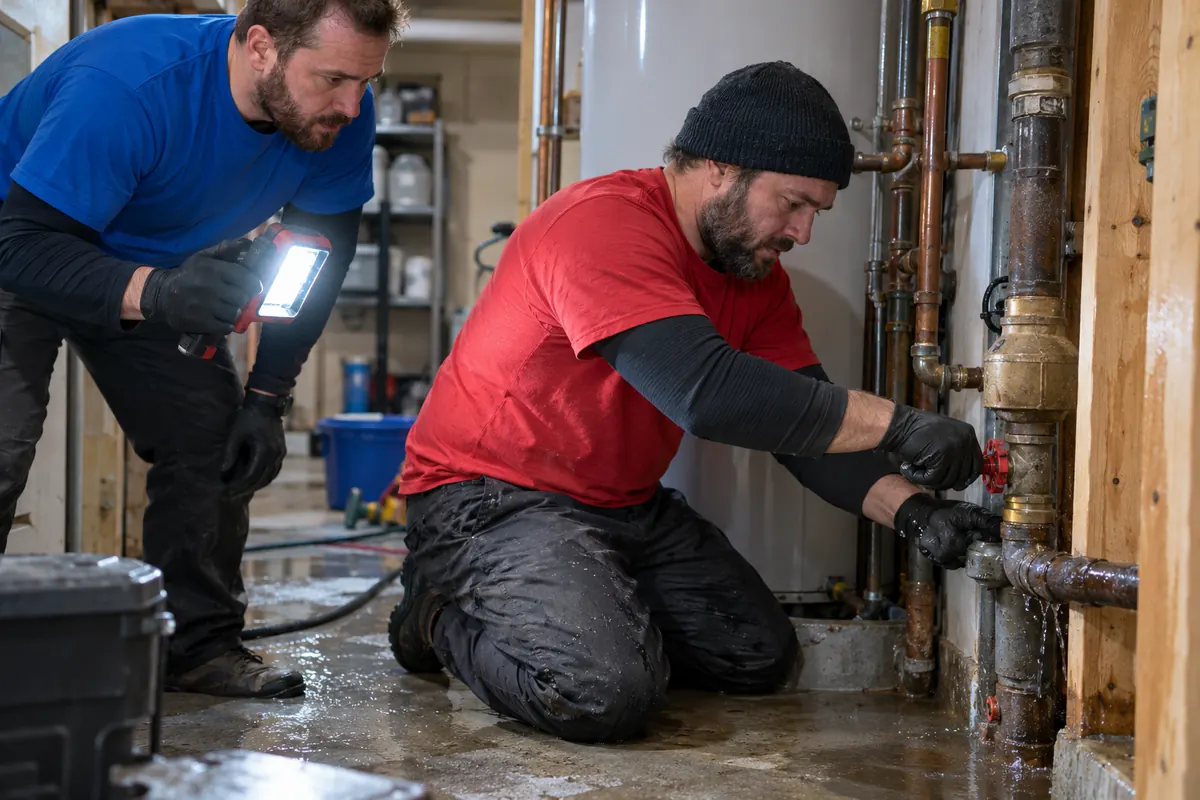
Shut off the water
We close the appliance valve or the tank inlet and check the nearby floor and drain.
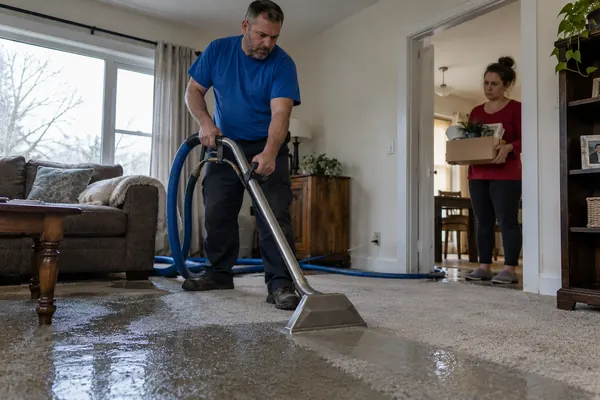
Extract the water
Wand extractors take water off floors and out of carpet and pad.
Look behind the machine
Once it is disconnected, we check the wall and floor behind it for damp.
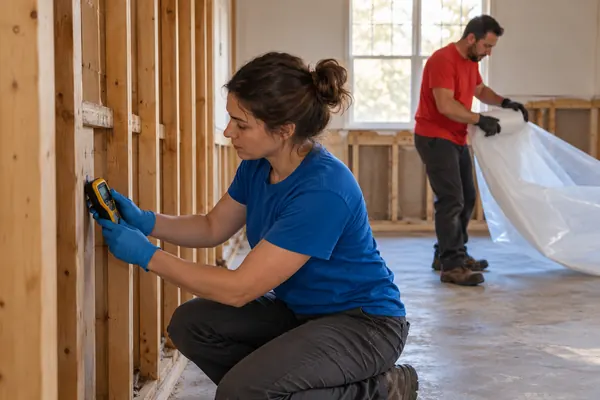
Open cabinet bases and walls
Toe kicks and a low strip of drywall come off so wet cavities can dry.
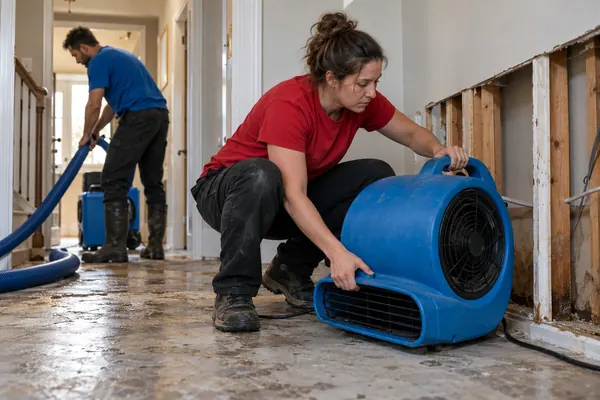
Dry the area
Air movers and a dehumidifier dry floors and walls, and we read until the numbers match dry material.
Record the cause
We photograph the failed part for your claim and tell you what we found.
Appliance leak surprises
- Cabinet bases that swell and cannot be dried
- Water that ran under flooring to the next room
- Hidden leaks behind a washer or fridge
- Water heaters that failed in a closet nobody opens
Where appliance leaks hide in older Queens homes
Washers and water heaters often sit in a cellar corner or a small closet, where a drip can run for a long time unnoticed. Many tanks in older buildings are well past their expected life.
In a two-family or a row house, a leaking washer upstairs soaks the floor and drips into the unit or the cellar below. Cabinet bases and kitchen floors above a cellar are the usual casualties.
Hoses, fittings and tired tanks
Rubber washer hoses bulge and burst. Plastic fittings on dishwashers and ice makers crack with age. A braided steel hose costs a few dollars and replaces a part that fails without warning.
Tanks wear out too. Rust streaks, a damp base or a rumbling sound mean the end is near. Replacing one on your own schedule costs far less than replacing it after a flood.
If a machine is leaking right now
- Close the appliance's shutoff valve, or the main if you cannot find it
- Unplug an electric appliance only if the floor and your hands are dry
- If a gas water heater is flooded, shut off the gas and call Con Edison if you smell gas
- Lift rugs and boxes off the wet floor
- Photograph the appliance, its label and the wet area
- Do not try to move a heavy tank by yourself
Appliance and water heater leak cost in East Elmhurst
In the New York City area, a typical estimate for appliance and water heater leak cleanup runs $800 to $4,000. A small spill on tile is at the low end, and a leak that soaked cabinets and walls costs more. These are not guaranteed prices. Call for an exact quote. See all price ranges.
Questions we hear about this
How long before a leak causes real damage?
Mold can start in a day or two on wet drywall and cabinet bases. Quick drying avoids replacement.
Will insurance pay?
A sudden failure often is covered. Slow, ongoing leaks often are not. Photos of the failed part help.
Can the cabinets be saved?
If clean water hit them and drying began fast, often yes. Particleboard that has swelled usually cannot be saved.
Do you replace the water heater?
No, a plumber does. We clean the water and dry the space.
Does hot water change anything?
Hot water can loosen adhesive and push steam into walls. We account for it in our readings and in what we open.
Read next Knowing where the shutoff is saves hours. Read the first 60 minutes after a burst pipe.