Where pipes freeze in East Elmhurst homes
New York winters bring long stretches below freezing, and the swings between cold snaps and thaws are hard on plumbing. In the older attached homes of East Elmhurst, supply lines often run along exterior walls, through unheated garages, across cellar ceilings near drafty windows, and into rear extensions that were added later with thinner insulation.
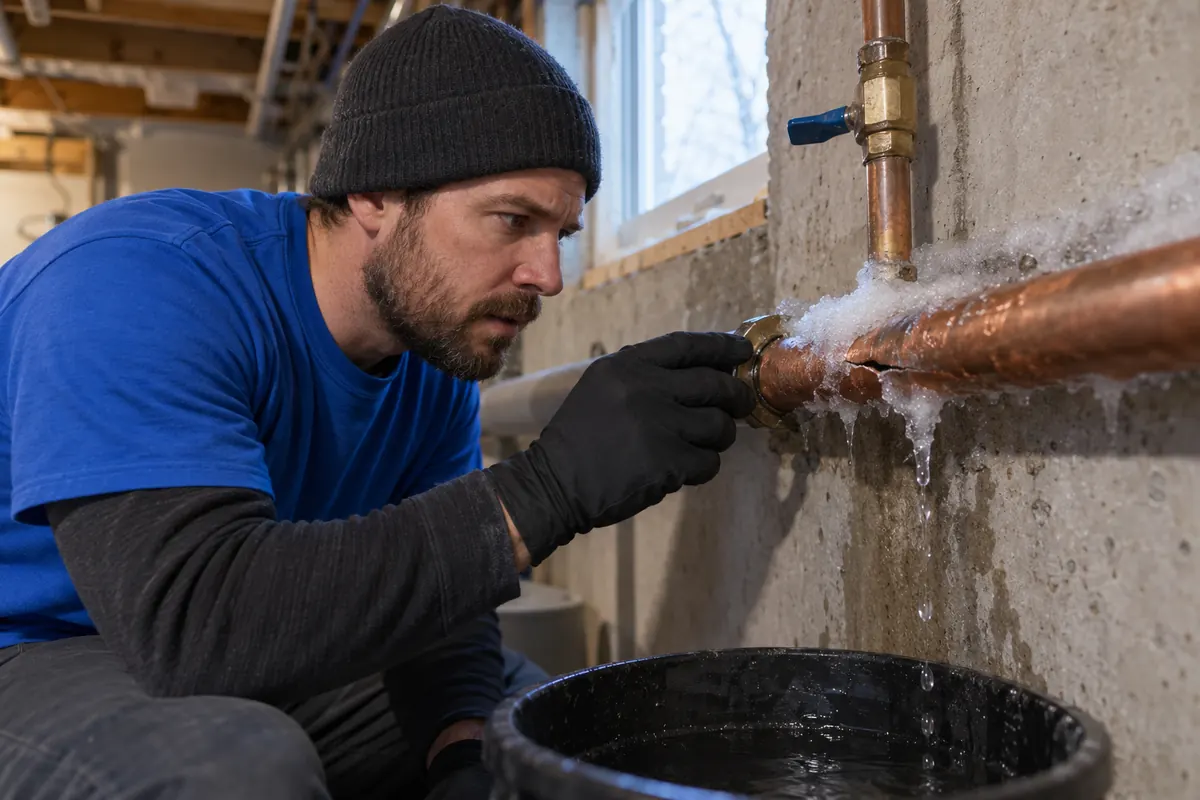
Pipes that froze are not always the ones that burst. Ice builds pressure between the blockage and a closed faucet, and the split can show up a few feet away.
A home left empty during a cold week is the worst case. A rented unit with the heat set low, a vacant upper floor or an owner away on a trip can mean hours or days of running water before anyone notices.
Warning signs a pipe has frozen or split
Catch it early and the cleanup is smaller. Watch for:
- A faucet that runs a trickle or nothing at all on a freezing morning
- Frost or ice on exposed pipes in the cellar, garage or an unheated back room
- Plaster or drywall that bulges, stains brown or feels cold and wet
- The sound of running water when every fixture is off
- Water stains spreading across a ceiling below a top-floor or roof-space run
- A sudden jump on the water meter with nobody home
Close the main valve now
- The main shutoff is usually where the water line enters the house: a basement wall near the meter, a utility closet or a front cellar
- A lever handle is closed when it sits crosswise to the pipe. A round wheel turns clockwise until it stops
- Open one faucet low in the house to drain the lines
- Do not use a torch or open flame to thaw a pipe
- Take photos of the damage before you touch anything
- Switch off power to wet rooms only if the panel is dry
Our cleanup process for ruptured lines
Shut off and isolate
We confirm the main valve is closed and help isolate the broken run so the house can keep its other water.
Extract from the lowest point
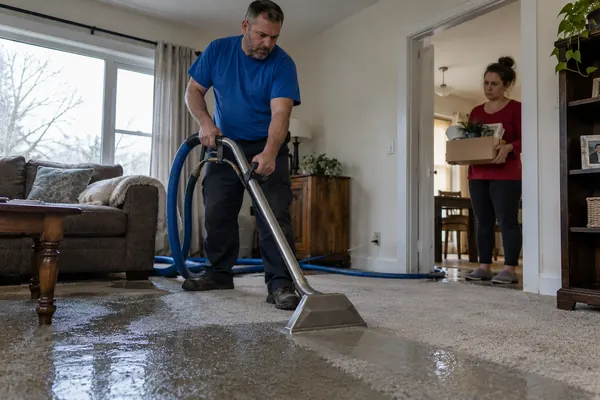
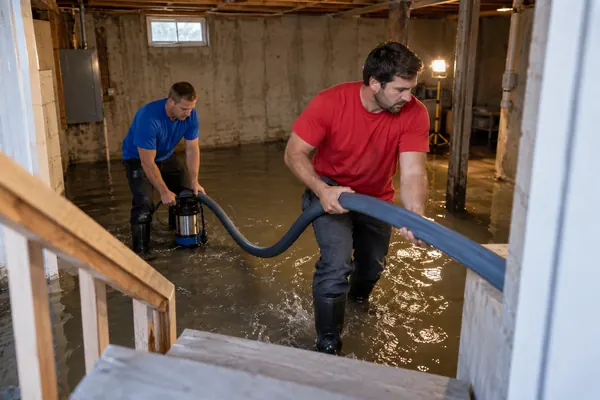
Cellar water is pumped out first, then wall cavities and flooring are extracted from above.
Open wet walls and ceilings
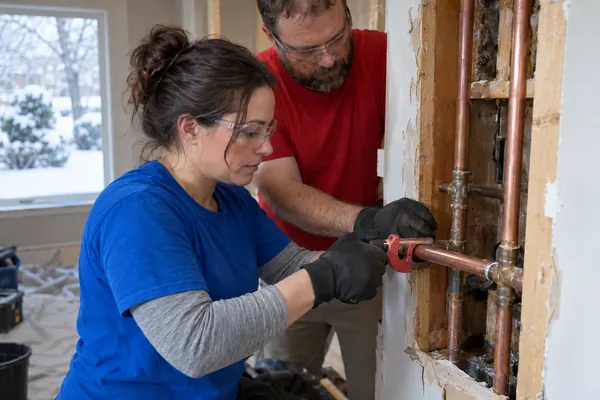
Wet plaster, drywall and insulation get cut back so framing can dry. We cut clean lines to make the repair easy.
Deep dry the lower level
Dehumidifiers, air movers and a sealed work area pull moisture out of joists, block walls and subfloor.
Dry exterior walls and top floors
Warm, dry air is directed into cold wall bays where water pooled behind siding, brick or sheathing.
Check for hidden spread
A thermal camera and meter sweep catch wet spots on lower levels where the water ran down.
Document and hand off
Photos, moisture logs and a written scope go to you and your insurer. We tell you when your plumber and drywall contractor can start.
Why water keeps spreading after the thaw
A frozen pipe is often sealed shut by ice, so the crack stays quiet. When the temperature climbs, the ice melts and the line is suddenly under full pressure with an open split. Water pours out, sometimes for hours, before anyone notices.
It then follows gravity. It runs down the inside of a wall, soaks insulation, pools on the subfloor and drips through the ceiling below. Water can also travel along pipes and joists to a spot far from the break.
A cold-night checklist for East Elmhurst homes
When the forecast drops into the teens or low 20s, do these before bed:
- Let a faucet drip on exterior walls and at the far end of the house
- Open cabinet doors under sinks on outside walls
- Close the garage door and any cellar windows that leak air
- Keep the thermostat at 60 degrees or higher, even away from home
- Disconnect hoses and cover outdoor spigots
- Know where your main shutoff is and make sure it turns
Cellars, garages and exterior walls: how we dry each
Cellars come first. Water pools on the floor and soaks block walls, and joists drink it up. We pump it out, remove wet insulation and set dehumidifiers and air movers to dry the wood and masonry.
Garages and rear extensions need a different touch. Wet insulation sits against thin walls and cold sheathing. We open the bay and push warm, dry air through until the readings come down. Top-floor and roof-space leaks mean pulling wet insulation and ceiling below, then drying the rafters and decking.
When the boiler or radiators fail in a cold snap
Many Queens homes and small buildings heat with a boiler and radiators or baseboard. When the boiler locks out on a freezing night, rooms cool quickly, and pipes in exterior walls and unheated spaces begin to freeze within hours. A building that loses heat while the owner is away is the classic setup for a burst pipe.
If your heat stops, call your fuel company or heating contractor first. Open cabinet doors, let faucets drip and keep the cellar door closed to hold what warmth there is. If a pipe has split, close the main and call us. We extract the water and dry the walls while your heating contractor works on the system.
Renters, supers and who to call first
If you rent, the order of calls matters. Close the shutoff in your unit if you can. Call the landlord or the super and tell them in writing, even if it is a text, so the time is recorded. Then call us if water is spreading. We keep a record you can pass to the owner and your renters insurer.
If you own a two-family, call your plumber and a restoration crew at the same hour. Water in a stacked building runs down to the tenants below, and every hour you wait adds rooms to the job.
How cold is cold enough? A plain guide for Queens
Pipes do not freeze at 32 degrees. They freeze when cold lasts long enough to pull the heat out of the pipe. Here is a rough guide for a typical East Elmhurst house:
- Low 30s for a few hours: usually fine inside a heated house
- Mid to upper 20s overnight: exposed pipes in garages and outside walls are at risk
- Teens or colder: pipes in exterior walls and unheated cellars can freeze without extra protection
- Windy nights: wind drives cold into gaps and makes the same temperature much harder on pipes
- Several freezing days in a row: even pipes that survive one night can freeze on the third
Insulation, heat tape and what really protects a pipe
Foam sleeves slow heat loss but do not create heat. They help most when the pipe is in a space that stays just above freezing. Electric heat tape adds heat and works on exposed runs when installed and used as directed. Sealing the air leak that lets cold in, such as a gap at a rim joist, a cracked cellar window or a loose garage door, often does more than anything wrapped around the pipe.
A plumber can also reroute a problem pipe out of an exterior wall, or add shutoff valves so a split can be isolated without closing the whole house. We do not install any of this, but we can tell you where we find splits after a freeze, so you know where to focus.
What we usually find after a freeze
- Several lines split at once in an unheated back room
- Insulation soaked in an exterior wall
- A ceiling that filled with water below a top-floor break
- Water still running because the main stayed open
- Tenants or owners who were away for days when the line let go
Frozen and burst pipe cleanup cost in East Elmhurst, NY
A typical estimate for cleanup after a burst pipe is $2,000 to $9,000. These figures are typical estimates for the New York City area, not guaranteed prices. The plumber's repair is separate. Call for an exact quote.
| Job type | Typical estimate |
|---|---|
| Single burst line, one room affected | $2,000–$4,000 |
| Cellar or garage pumping and deep drying | $3,000–$6,000 |
| Top-floor ceiling water damage with wet insulation | $3,000–$7,000 |
| Multiple rooms or a flooded lower level | $6,000–$9,000+ |
Questions we hear about this
Why does water keep spreading after the thaw?
Frozen pipes hold ice that plugs the crack. When it melts, full pressure pushes water out, and it runs down walls and under floors for hours.
Do pipes in East Elmhurst really freeze?
Yes, especially along exterior walls, in garages and in back extensions. A few hard nights below the mid-20s can split several lines at once.
Will the plaster or drywall have to come out?
If it has been wet for more than a day or has swelled, usually. Dry, clean material above the wet line sometimes stays.
Does my homeowners policy cover a burst pipe?
Sudden bursts are often covered, but damage from a heat that was turned off may be treated differently. Check your policy or ask your agent.
Can you come out during a freeze at night?
Emergency services are available 24/7, including freezing nights and holidays. Call and tell us where the water is.
What if I was away when the pipe froze?
Tell us how long you were gone. Water that ran for days needs wider opening and longer drying, and we plan for it.
I rent. What do I do first?
Close the valve if you can, call the landlord or super in writing, and call us. We keep records you can pass to the owner.
Read next Want to head this off next winter? Read how to keep pipes from freezing in a Queens cold snap.