Clues that water is running under the floor
They seem unrelated, which is how slab leaks stay hidden:
- A water bill that creeps up with no change in how you use water
- A warm patch on the floor when the heat is off
- The hiss of running water with every fixture closed
- Damp carpet or lifting floor tile in one spot of a ground-level room
- Baseboard gaps and fine cracks that appear and widen
- A meter dial that keeps turning when nobody is using water
Where slab leaks turn up in Queens homes
Many East Elmhurst properties have a concrete floor in a garage, a rear addition or a ground-level apartment. Older buildings carry copper or steel supply lines through or under that concrete, and those lines age over decades.
Concrete holds water and gives it up slowly. Add the damp soil close to the bay and a leak under the slab has plenty of moisture to pull upward. The first clue is often a patch of floor that stays cool and damp or a water bill that jumps.
Slab leak trouble spots
- Floors that look dry but read wet in concrete
- Glued flooring that holds moisture
- Cabinet bases that wick water upward
- Leaks that ran for weeks before anyone knew
How we handle a slab leak job
Wait for the plumber
Drying cannot start until the line is shut off or repaired, so we work in step with your plumber.
Map the wet area
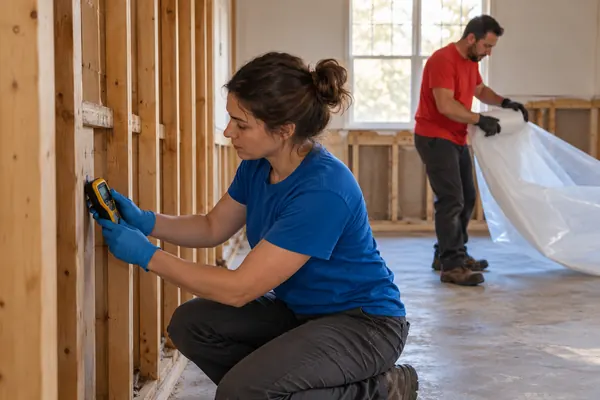
A moisture meter, a thermal camera and a concrete probe show how far the water traveled.
Lift the wet flooring
Carpet, pad, laminate and tile over the leak come up so the slab can breathe.
Dry the concrete
We use dehumidifiers and air movers and, where it helps, floor drying systems that draw moisture out of the slab.
Check walls and cabinet bases
Rising moisture often wicks into drywall and toe kicks. We open them where needed.
Confirm and report
We read the slab until it hits the target, then hand you the log for your records and your insurer.
Working beside your plumber
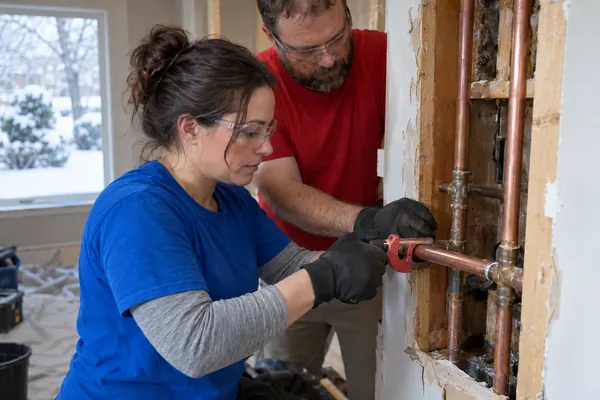
A slab repair can mean breaking concrete, rerouting a line or replacing a run of pipe. We time our drying to start as soon as the area is open and the water is off, so the space is not wet twice.
Ask your plumber to tell us what was cut and where. We use that to place equipment and to check for moisture that traveled past the repair.
If you suspect a leak under the floor
- Turn off every fixture and see whether the water meter still moves
- Close the main valve if you can hear water running
- Move furniture off any damp floor
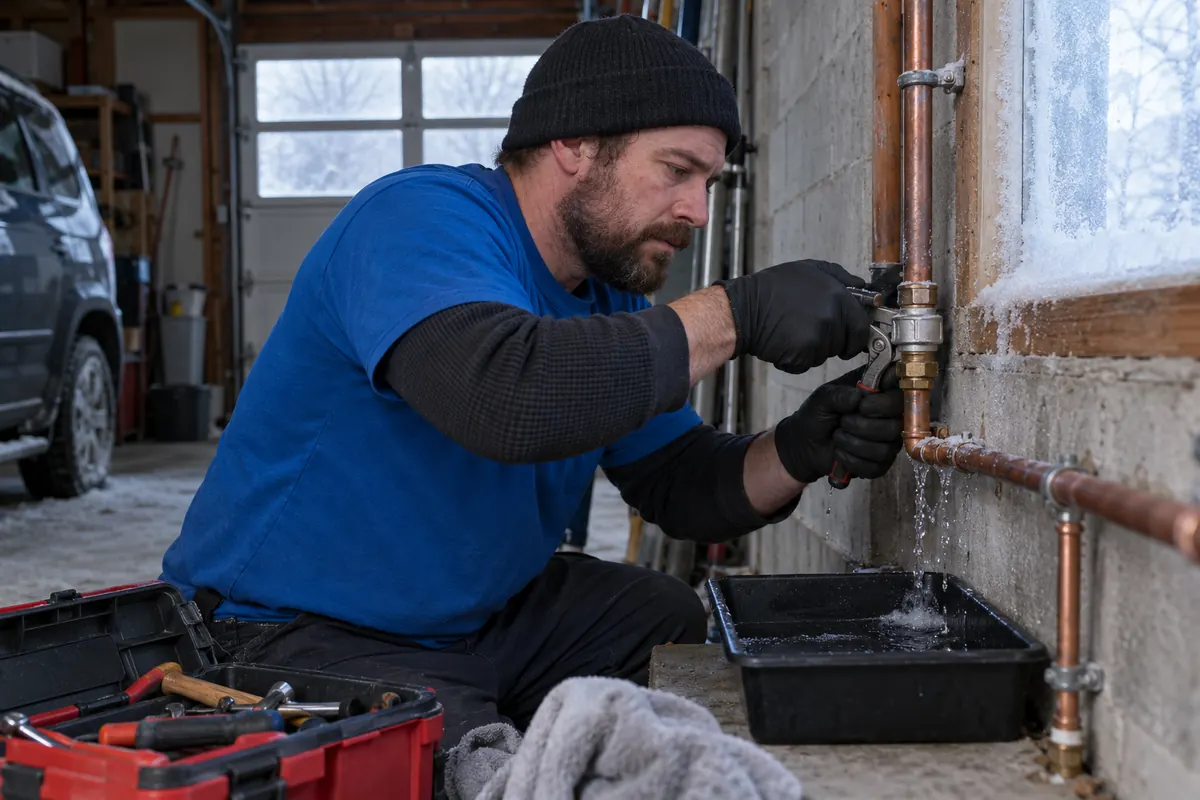
- Call a licensed plumber to locate the leak
- Do not drill or break the floor yourself
- Photograph damp spots and set aside your last few water bills
Slab leak water damage cost in East Elmhurst
A typical estimate for drying and cleanup after a slab leak runs $1,800 to $7,000 in the New York City area, not counting the plumber's repair. Concrete drying time and flooring removal are the main drivers. These are not guaranteed prices. Call for an exact quote. See all price ranges.
Questions we hear about this
Does insurance pay for a slab leak?
Policies differ. Many cover the resulting water damage but not the cost of finding or repairing the pipe. Ask your agent before work starts.
How long will the concrete take to dry?
Days to weeks. The slab is thick and a surface that feels dry can still read wet inside.
Can I keep the flooring?
Sealed tile sometimes stays. Carpet and glued floors over a wet slab generally have to be replaced.
Will you locate the leak?
We trace where the water traveled. Locating the pipe is a plumber's job, and we work alongside them.
Is it an emergency?
If water is actively running, yes. A slow leak can wait for a plumber the next morning, but the damage keeps growing.