Why the first call matters
The first two minutes on the phone shape the whole job. The person who answers is not only taking your address. They are deciding how many people to send, which pumps to load, whether the truck needs suits and how fast it has to move.
Most callers are standing in water, trying to remember where the shutoff is. That is normal, and nobody expects a polished report. If the water is still coming in, stop reading and call our emergency line. Come back to this when the crew is on its way.
Start with where the water came from
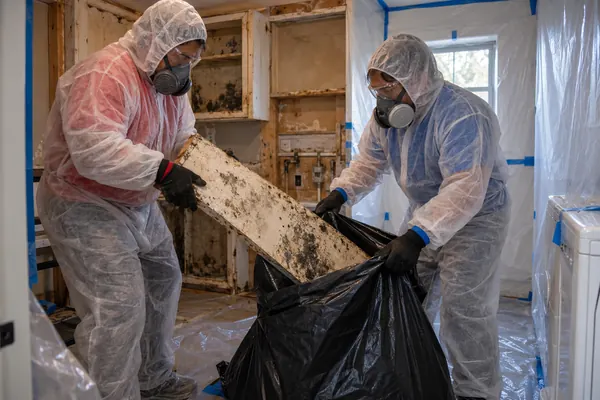
The source tells us the most. A supply line, a faucet or a tank holds clean water. A washer or dishwasher holds gray water. A toilet, a floor drain, a sewer or outside flooding is contaminated. Each one changes the gear, the safety steps and what can be saved.
You do not have to use the technical words. Say it the way it happened: the washer hose let go, the pipe in the wall split, the street flooded and water came down the driveway, brown water came up the basement drain. If you are not sure, say that, and tell us what you saw and smelled.
Describe how much and how long
Tell us how many rooms are wet, how deep the water is and how long it has been there. An inch of water in a kitchen is a different job than four inches in a cellar. Water that has sat overnight has already moved into baseboards and drywall, and that changes the plan.
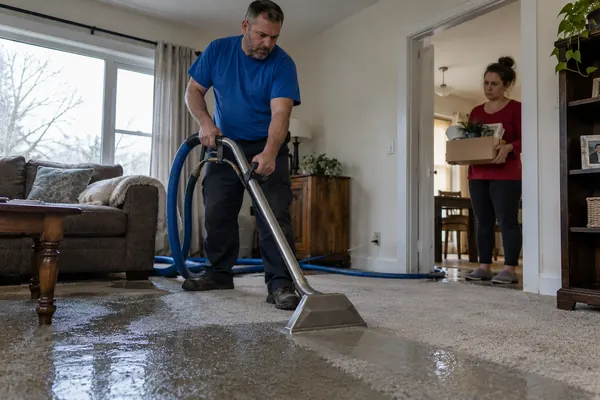
Mention the floor type if you know it. Carpet over pad, hardwood, tile, laminate and bare concrete all dry differently. If the water is on more than one floor, tell us. In a two-family or an apartment building, say which units are involved and whether anyone is home.
Tell us what is at risk
Say if water is near outlets, the panel or appliances. Say if someone in the house uses medical equipment, has asthma or is pregnant. Tell us about pets and small children. These details change what we ask you to do before we get there and how we set up when we arrive.
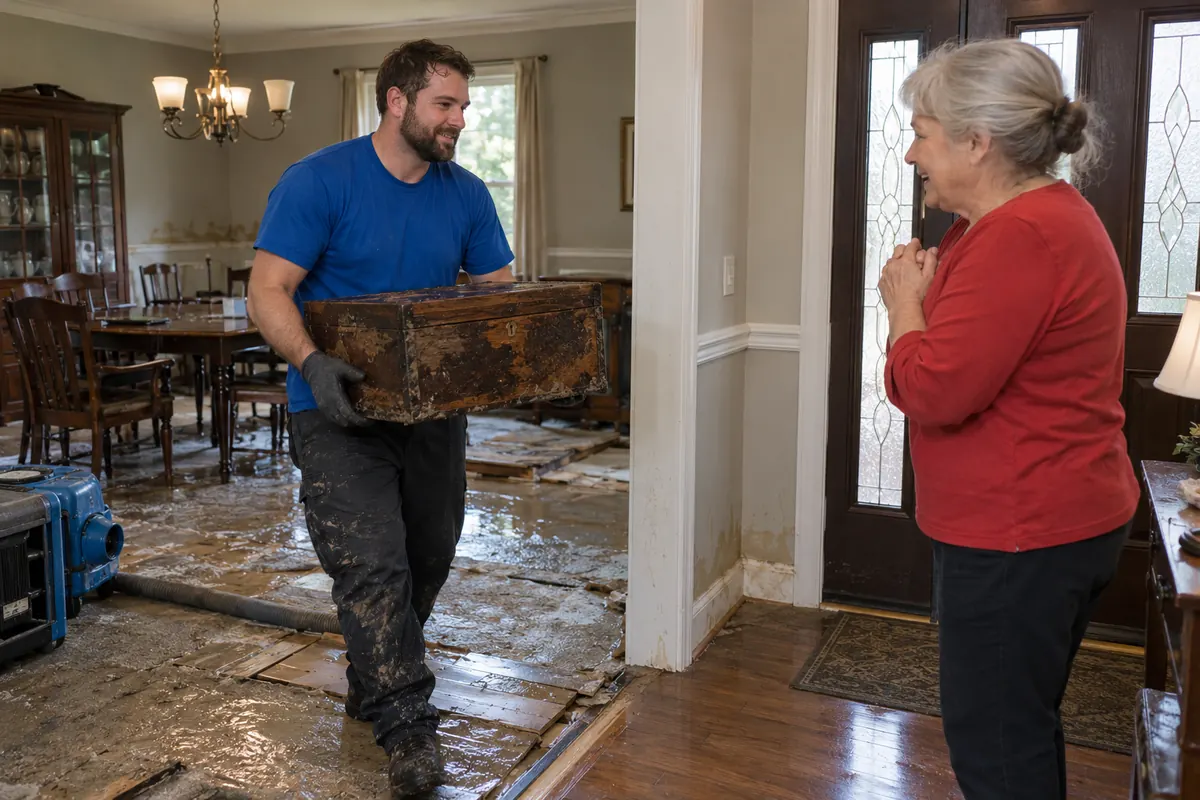
If you have kept anything dry, tell us. If there are boxes in the cellar, stored papers, family photos or electronics on the floor, we can take care with them. We cannot save everything, but a list of what matters most helps us decide the order of work.
Renters and landlords
If you rent, tell the crew who the landlord or manager is and whether they know. Many apartment jobs stall because nobody can approve the work. Our apartment and multi-unit water damage service is built around those situations, and a quick message to the owner helps us start sooner.
If you manage a building, say which units are wet, whether the tenants are home and who holds the keys. Mention whether the source is in a shared pipe or a single unit. If the water came from an upper floor, we want to see that unit too.
What we will tell you
Before we arrive, we will tell you what to shut off and what to leave alone. Expect to hear: close the main, keep out of water near electrical, lift small items to dry surfaces and take photos before you move things. Our water extraction and removal crew will do the rest.
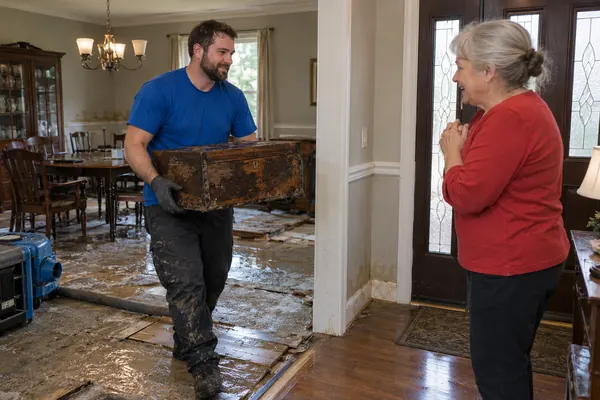
When we get there, we check for hazards, find the source, start pumping and set up drying equipment. We take moisture readings, tell you what we found and write it all down for your insurance claim. A clear first call makes each of those steps faster. If the water came from the sewer, read our post on what to do after a sewer backup in Queens.
Things people forget to mention
People often forget to say whether the building has a crawl or a cellar, whether the water heater or boiler is in the wet area and whether a sump pump was running. They forget to mention a recent repair, a prior leak in the same spot or a nearby hazard such as a gas appliance. A few words about access also help, such as a narrow stair, a locked gate or a parking limit on the street. Those details let us arrive with the right gear and park the truck without delay.
Quick answers
Do I need to know the exact cause?
No. Describe what you see and where it started. We will find the source on site.
Should I wait for my insurance company before calling?
No. Call a crew first to stop the damage, then notify your insurer. Insurers expect you to limit the loss.
Can I send photos?
Yes, if you can take them safely. Photos of the source, the wet rooms and the water line help us plan the equipment.
What if I call at night?
Emergency services are available 24/7. Call, describe what you see and we will tell you what to do while the crew heads out.