How a cellar flood announces itself
It can arrive as a rush or a creep. Look for:
- Water bubbling up from the floor drain or the sump pit
- Wet patches or white mineral crust on block and brick walls
- A damp line where the wall meets the slab
- Soggy boxes, rugs or finished flooring in the lowest room
- A musty smell that gets stronger after rain
- The boiler or water heater sitting in a puddle
Why East Elmhurst cellars take on water
Below-grade rooms are common here, and so are driveways that tilt down to a garage or a cellar door. When the street floods, that driveway becomes a ramp and delivers the water to your threshold.
Flat roofs and downspouts that empty beside the foundation press water against the walls from the outside. Over a long rain, that pressure pushes through mortar joints and around cellar windows.
Then there is the sewer. The older combined pipes can fill in a cloudburst and push water back up the floor drain. Cellar water might be clean, gray or contaminated, and the category decides the whole job.
Problems on flooded basement jobs
- Water that is still rising from the street
- Stored items that soak up water and spread mold
- Finished walls that hide wet studs
- Sump pumps and drains that failed in the storm
How we work through a flooded cellar
Ask where it came from
Water from a floor drain or toilet is treated as contaminated, and the crew suits up before going in.
Check power and fuel
We look at the panel, the outlets and the boiler or water heater before anyone steps into the water.
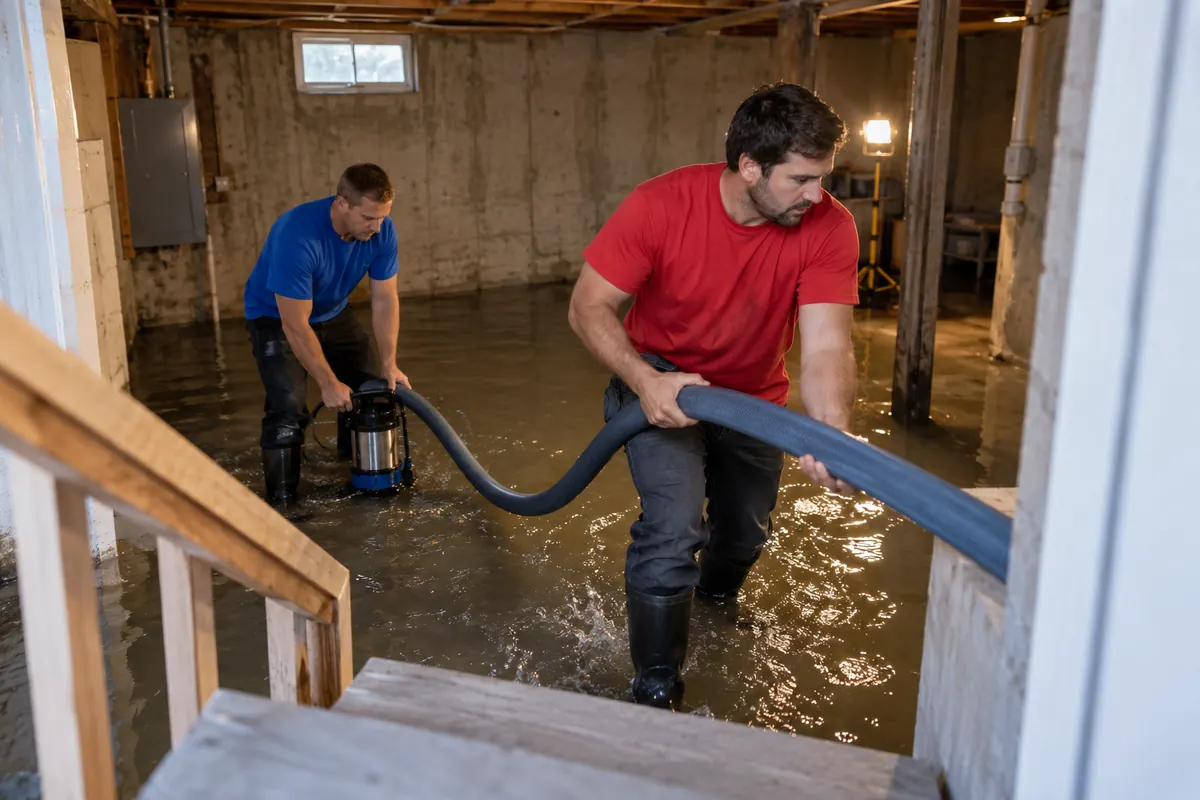
Lower the level in stages
Pumping too fast against saturated soil can stress walls, so we bring the water down steadily and watch the masonry.
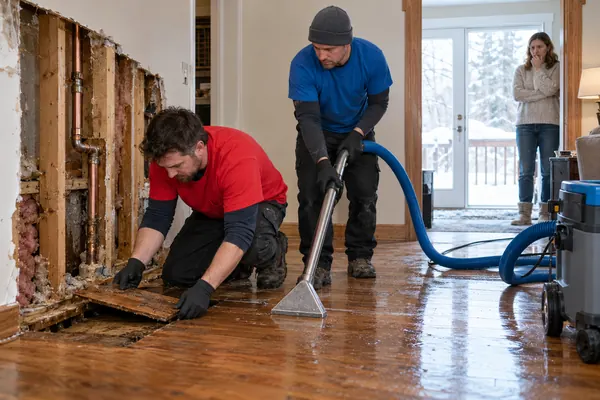
Strip what is wet
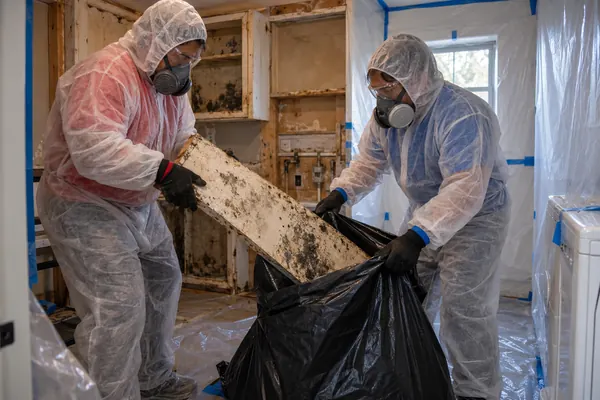
Carpet, pad, wet drywall, insulation and stored cardboard come out. Porous items from contaminated water are not saved.
Clean and disinfect
Floor, walls and drain area are washed and treated, with extra steps after sewage.
Dry the shell
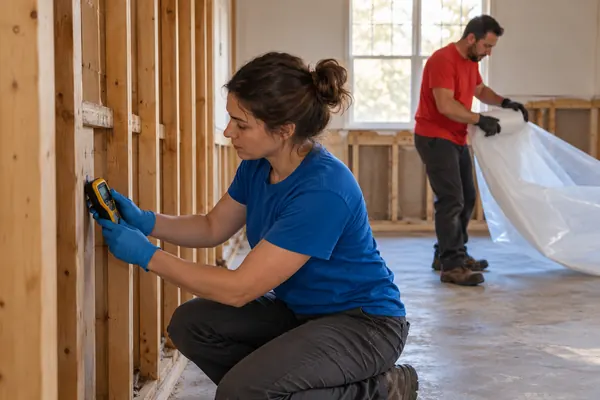
Dehumidifiers and air movers dry block walls, framing and slab. We read moisture each visit and stop only when the numbers are right.
Before the crew arrives
- Stay out if the water is above outlets or the panel is wet
- Keep space heaters and shop vacuums out of a wet cellar
- Hold off flushing toilets or running sinks if sewage is coming up
- Carry what you can from the lowest shelves upstairs
- Film the water line and every ruined item
- Call your insurer to ask about sewer backup and flood coverage
Finished cellars and basement apartments
A finished cellar hides a lot. Paneling, drywall and carpet sit on a slab that may never have been fully dry, and a flood soaks all of it. We open the base of walls to check studs and the bottom plate, then list what has to come out.
If someone lives down there, we take extra care with exits, wiring and air. We talk with the owner and the tenant about timing, because a below-grade apartment needs a plan that keeps people safe while the machines run.
Basement flood cleanup cost in East Elmhurst
In the New York City area, basement flood cleanup typically estimates between $2,500 and $9,000. Clean water that is caught early sits at the low end. Contaminated water, finished spaces and apartments cost more because more material has to be removed. These are not guaranteed prices. Call for an exact quote. See all price ranges.
Questions we hear about this
How fast should the water come out?
As soon as it is safe. A day or two of standing water feeds mold and ruins things that could have dried.
Can you pump during a storm?
Yes, unless water is still rising outside against the house. Then we may pump and recheck so the cellar does not refill.
Does the drywall have to go?
After contaminated water, yes. After clean water caught early, sometimes it can be dried in place.
What about a basement apartment?
Safety comes first. We check exits, electrical and ventilation, and we plan the work with the owner and the tenant.
Do you install sump pumps or backwater valves?
No, we clean and dry. We tell you where the water entered, so a licensed plumber can advise on prevention.