The funnel effect
Many houses in East Elmhurst have a garage or a cellar door at the bottom of a driveway that slopes down from the sidewalk. On a dry day it is just how the lot was cut. In a storm it is a channel. When the street fills, the driveway steers the water straight at the door.
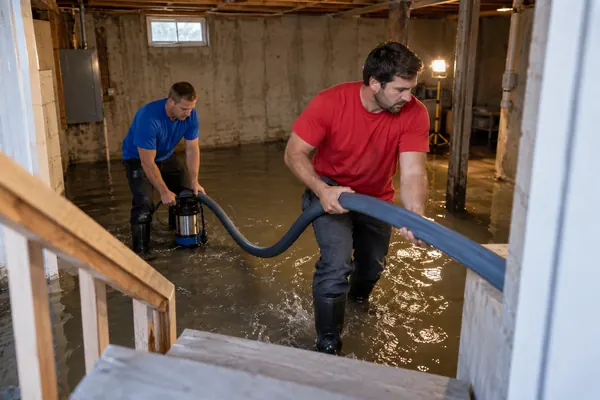
A garage door is not waterproof. Water slips under it and through the seams, and a cellar door is often only a few inches thick. A few inches of water outside the door becomes a foot inside, and it settles in the lowest room of the house.
Why the street floods
When rain falls faster than the sewers can carry it away, the catch basins at the curb fill and then overflow. The water spreads across the road and settles in the low spots. East Elmhurst is flat, and there are few places for it to go.
Autumn makes it worse. Leaves and trash block the grates. If the catch basin near your house is covered with leaves, water backs up faster. You can clear it yourself, if it is safe, or report a blocked catch basin to 311.
What water does inside
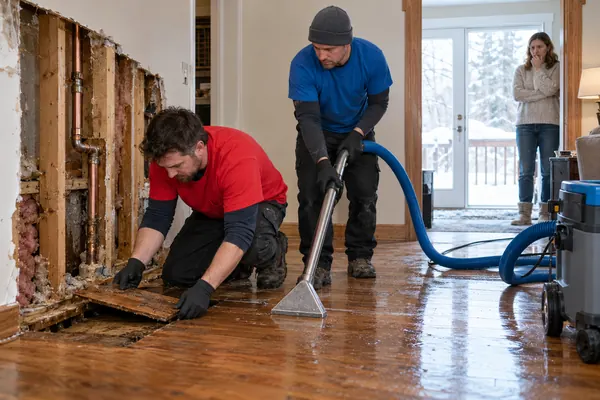
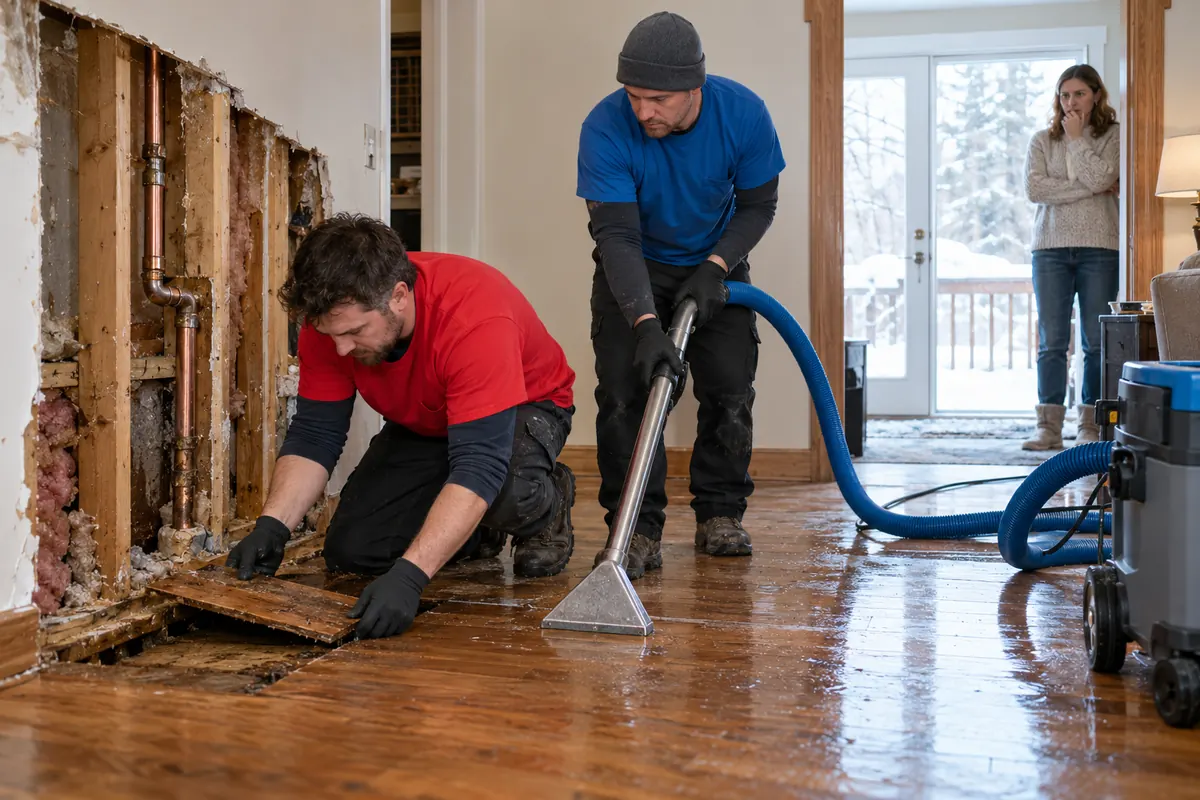
Once inside, floodwater spreads across the floor and seeps into walls. In a finished garage or cellar, it soaks drywall, insulation and carpet. In a house with a living area over the garage, water can travel along joists and reach the rooms above.
Street water is not clean. It carries oil, litter, soil and sometimes sewage from overflows. We treat it as contaminated, which means protective gear, removal of porous materials and cleaning and disinfecting after pumping. Our storm and flash flood damage restoration crew covers all of those steps.
Low-cost ways to slow the water
None of these is a guarantee, but they help. Sandbags or flood barriers placed across a garage door during a storm can cut the inflow. Make sure weatherstripping at the base of doors is in good shape. Seal gaps where the driveway meets the foundation with a flexible sealant.
Keep the area clear of leaves and debris. Move valuables off the garage and cellar floors before a storm. If the forecast calls for heavy rain, check your sump pump, if you have one, and keep your phone charged. It is cheaper to prepare for an hour than to clean up for a week.
Longer-term fixes
A trench drain at the foot of the driveway can catch water before it reaches the door and send it to a drywell or the sewer, where permitted. A raised threshold or a flood door can keep water out. A backwater valve on the sewer line helps with backup, and a sump pump removes water that gets in.
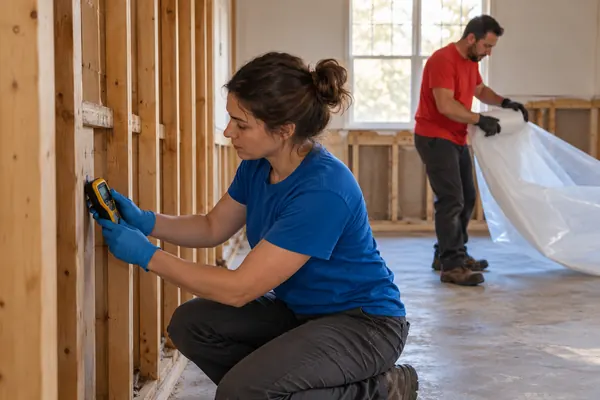
These jobs are for a licensed plumber or contractor, and some need a permit. We do not install them, but we can tell you what we saw and where the water entered. After a flood, we dry the structure so it does not hold moisture, which is what our structural drying service is for.
After a flood
Photograph the water line on the walls and the damage before you move anything. Call us, and then call your insurance company. Ask your agent whether you have flood coverage or sewer backup coverage, since a standard homeowners policy may cover neither.
If the water is rising and the street is flooded, do not go into the cellar. Stay upstairs and wait until the water outside drops. Do not try to drive through flooded streets to move a car. For more on what comes up the drain in a storm, read our post on sewer backups in Queens.
A quick check you can do today
Walk the front of your house and look at where the driveway ends and the door begins. Is there a lip, a drain or any barrier at all? Look at the base of the garage door for gaps and worn rubber. Check the sidewalk catch basin for leaves. Take a photo of each, so you have a baseline. Those five minutes tell you what a contractor or plumber needs to look at before the next big storm, and they give you something to compare against if water does come in.
Quick answers
Can I block the garage door with sandbags?
Sandbags can reduce water coming under the door. They help most when placed before the water arrives. Do not rely on them in deep water.
Is a trench drain legal?
Rules vary and some need a permit. A licensed plumber or contractor can tell you what is allowed at your address.
Does insurance cover street flooding?
Standard homeowners policies often exclude flood. A separate flood policy covers it. Ask your agent.
Who clears the catch basin?
The city maintains catch basins. If one is blocked, report it through 311. You can also clear leaves from the grate if it is safe.