Early signs of a sewer backup
A backup often builds slowly before it floods. Pay attention when:
- A toilet burbles when the washer drains upstairs
- Gray or brown water appears in a cellar floor drain
- A sewer smell hangs around the lowest drain in the house
- The toilet will not flush in a downpour
- Several drains run slowly at once, not just one
- A tub or shower fills with water during a storm or heavy use down the line
Why waste comes back up in East Elmhurst
A big part of New York City drains through combined sewers. Household waste and street runoff share the same pipe. In a cloudburst the pipe fills faster than it empties, and pressure pushes water back toward the lowest fixtures.
In a house with a cellar bathroom, a laundry tub or a floor drain below street level, that is the first place the water appears. It can arrive within minutes of heavy rain and linger until the sewer drains down.
Issues on sewage jobs
- Drains that keep pushing water back
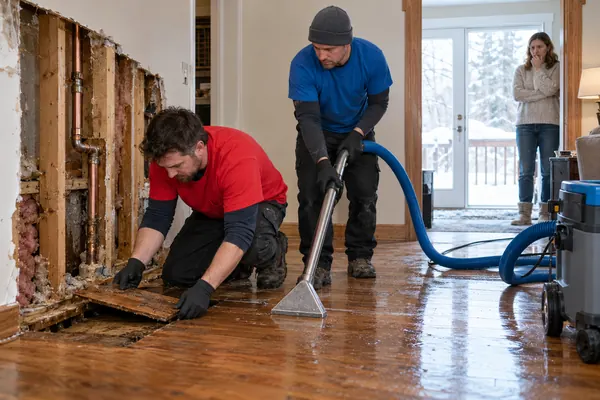
- Carpet and drywall that soaked up waste
- Odors that linger after surface cleaning
- Questions about whether insurance covers backups
What to do immediately
- Keep out of the water and keep children and pets away
- Do not flush toilets or run water to any drain
- Cut power to the area only if the panel is dry and easy to reach
- Do not mop or vacuum sewage with household tools
- Wash hands with soap and water after any contact
- Photograph the area from the doorway
How the cleanup runs
Suit up and seal off
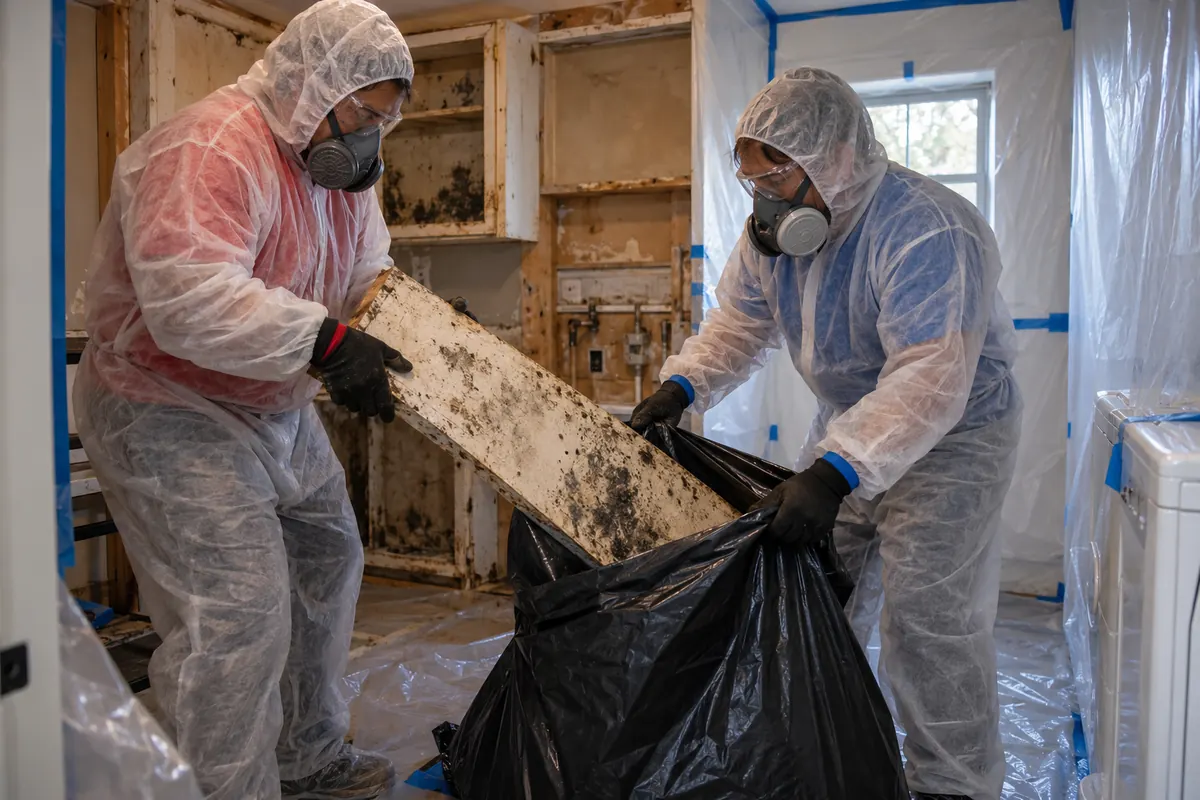
The crew wears gloves, boots, respirators and disposable suits. Doors close and plastic goes down to protect clean rooms.
Extract the water
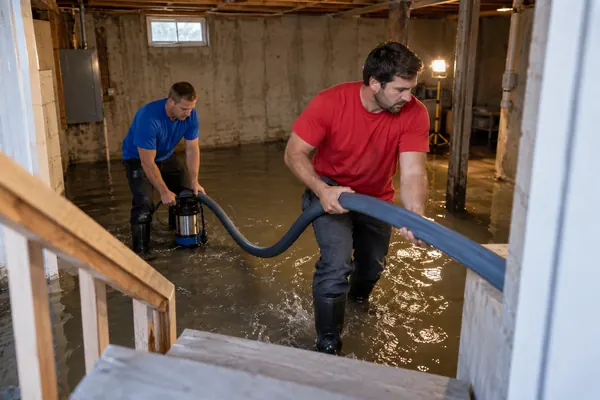
Pumps and extractors take out contaminated water, which is handled as the loss requires.
Remove porous items
Carpet, pad, drywall, insulation, cardboard and upholstered pieces that soaked are bagged and removed.
Clean and treat
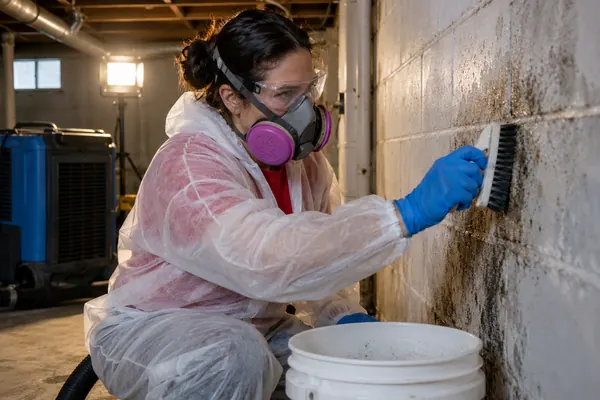
Hard surfaces, framing and the floor are washed, then treated with disinfectant. The drain area gets extra attention.
Dry and deodorize
Dehumidifiers and air movers dry the space, and air scrubbers pull odor and particles from the air.
Check and record
We take moisture readings, photograph the work and give you a written list of what was removed.
What goes in the bag and what stays
Anything porous that touched sewage is hard to make safe: carpet, pad, drywall, insulation, mattresses and cardboard. We bag it and haul it out. Metal, glass, sealed tile and hard plastic can be washed and disinfected.
Wood framing is cleaned, treated and dried, and in most cases it stays. We keep a running list, so you and your contractor can see exactly what was removed.
Sewage cleanup cost in East Elmhurst
A typical estimate for sewage cleanup in the New York City area runs $3,500 to $15,000 or more. Protective gear, disposal and removal of porous materials add to the cost compared with clean-water jobs. These are not guaranteed prices. Call for an exact quote. See all price ranges.
Questions we hear about this
Can I do it myself?
We do not advise it. Sewage carries bacteria and viruses, and safe cleanup takes protective gear, proper disposal and disinfecting.
Is a sewer backup covered?
A standard New York homeowners policy often excludes it unless a water backup endorsement was added. Check your policy and call your agent early.
What can be kept?
Metal, glass and sealed tile can usually be cleaned. Carpet, drywall and other soft items are generally thrown out.
Who repairs the sewer line?
A licensed plumber handles the line, and the city handles the main in the street. We clean the house and tell you what we saw at the drain.
When can we use the space again?
That depends on how far it spread. After removal, disinfecting and drying, we tell you when the readings and the cleaning say it is ready.
Read next Want the full story on how combined sewers fail? Read what to do after a sewer backup in Queens.