Frozen, or just slow?
The first clue is a tap that gives a trickle or nothing on a freezing morning. Check the other taps before you do anything. If only one is dry, the ice is on the line to that fixture. If all are dry, the freeze may be on the main or the service line, which is a different problem and a plumber's call.
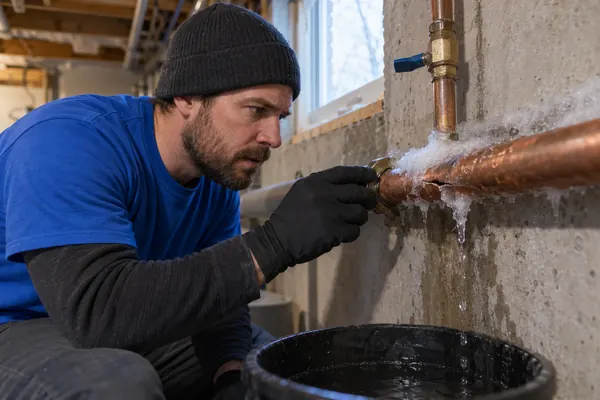
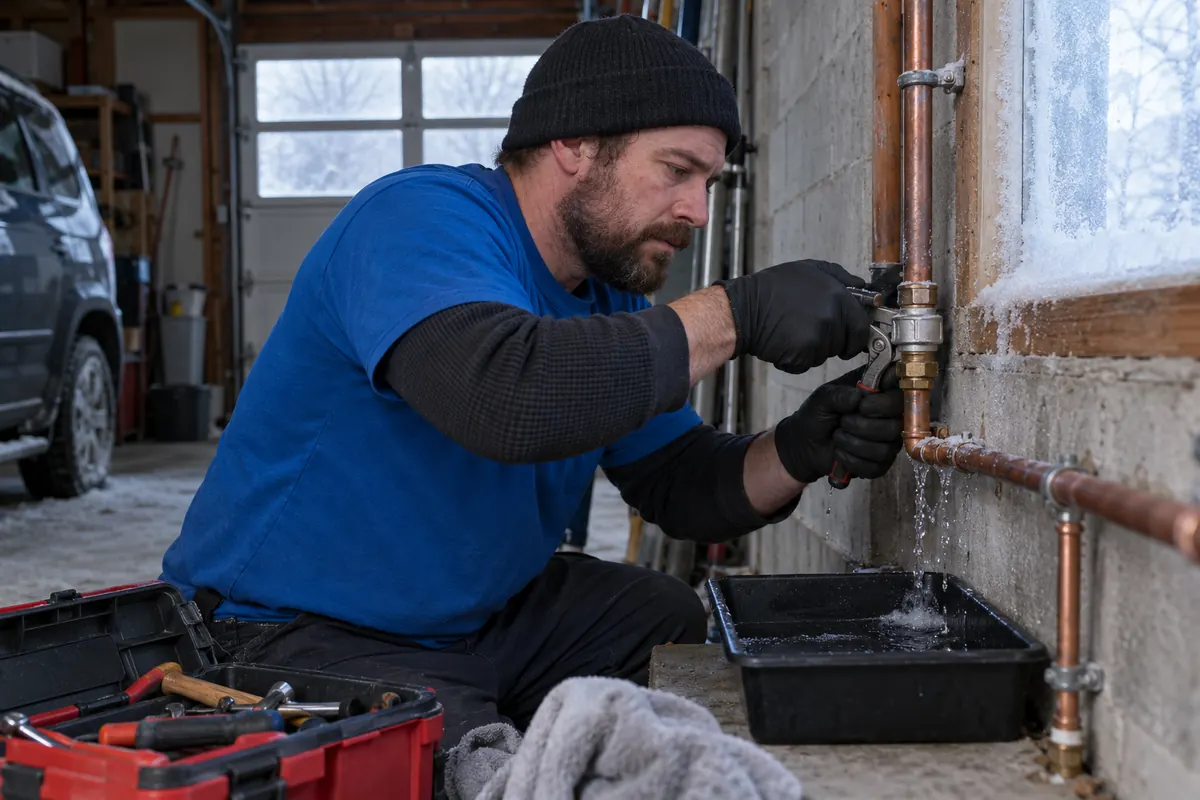
Then look at what you can see. Frost on a pipe, a white coating or a section that feels bitterly cold points to the spot. In Queens houses we usually find it near an exterior wall, a garage ceiling or a cellar window. Many frozen pipes sit within an arm's length of a draft nobody noticed all summer.
Open the faucet and start warming
Leave the faucet open. As the ice melts, water and steam need a path out, and an open tap relieves pressure. Starting at the faucet end and working back toward the frozen section keeps melted water from being trapped between ice plugs.
Open the cabinet doors under the sink. Run a hair dryer or a heat lamp on the pipe from a safe distance, moving it back and forth. A towel soaked in hot water and wrapped around the pipe also works. Patience is the point. A pipe that warms slowly is less likely to crack than one that is heated hard.
What never to use
Do not use a propane torch, a blowtorch or any open flame on a pipe. Fires in walls start this way, and a rapid heat jump can burst the pipe even if it was only partly frozen. Do not use a space heater inside a wall cavity or one that is not rated for the space.
Do not pour boiling water over a pipe, especially a plastic one. Do not use an electrical device while standing in water, and do not use a heat gun on a pipe near insulation or wood framing. If you are not sure whether the method is safe, stop and call a plumber.
How to tell if it split
Ice can hide a crack. Until the ice melts, the split is plugged and no water appears. When the pipe thaws, the full pressure of the house meets the crack, and water comes out. That is the moment people get hurt by a flood, and it is why we tell you to be ready before the thaw.
While you thaw, stay close. Keep a bucket nearby, and know where the main shutoff is. When water starts flowing at the faucet, look at the exposed pipe and the wall around it for drips, damp spots or a hiss. If you see any of them, close the main and call a plumber.
If it did split
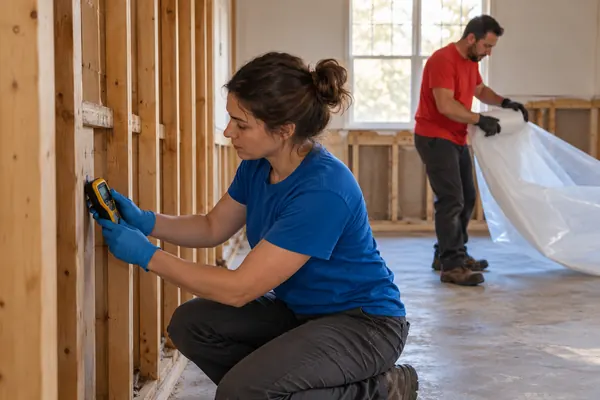
Close the main, drain the lines by opening a faucet, and call a plumber. Then call us. Our frozen and burst pipe cleanup service starts with extraction from the lowest point, opens wet walls and dries the framing with moisture readings every visit.
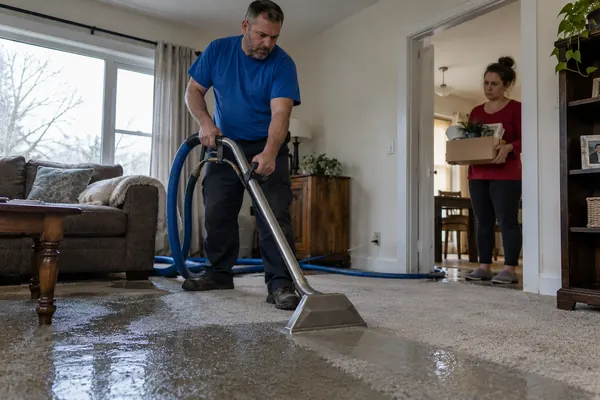
A split behind a wall can look small and still wet a lot of drywall. Water follows the pipe and the studs and comes out in a spot well below the break. If a ceiling or a wall is stained, our water extraction crew can pull water out of the floor while the plumber fixes the line.
After the thaw
Turn the water back on slowly and check every connection. Keep the heat on and check again an hour later and again at night. Look at the ceilings below the pipe and the base of the walls. A drip that starts after the pressure comes back can go unnoticed for a long time.
Add insulation to the section that froze, seal the draft that let the cold in and consider moving the line if it is in a bad spot. Read our guide on keeping pipes from freezing in a Queens cold snap for a full list of fixes.
When to stop and call a plumber
Some jobs are not for a hair dryer. If the frozen section is inside a wall or under a slab, if the pipe is already bulging or leaking, or if you cannot find where the freeze starts, stop. A plumber has tools to warm a pipe safely and to repair a split before the water returns. Call early, since many plumbers get busy on the first cold morning of the year. In the meantime, keep the heat on and keep the nearest faucet open.
Quick answers
Can a hair dryer damage a pipe?
Used at a distance and kept moving, a hair dryer is a safe way to warm a pipe. Do not hold it still or use it on a plastic pipe for long.
What if I cannot reach the frozen section?
If the pipe is inside a wall, raise the room temperature and call a plumber. Do not cut into the wall yourself unless you are prepared to handle a leak.
Will the pipe freeze again?
It may, if nothing changes. Insulate the pipe, seal drafts and keep the heat on. A drip on cold nights helps.
Does insurance cover thawing?
Many policies cover damage from a sudden burst but may not cover the plumbing work to thaw a pipe. Ask your agent.