How fast mold starts
Mold spores float in the air everywhere. What they need is food, a little warmth and moisture, and a wet cellar offers all three. Wet drywall, cardboard, paper and carpet are the food, and a cellar that is cool but not cold suits them fine.
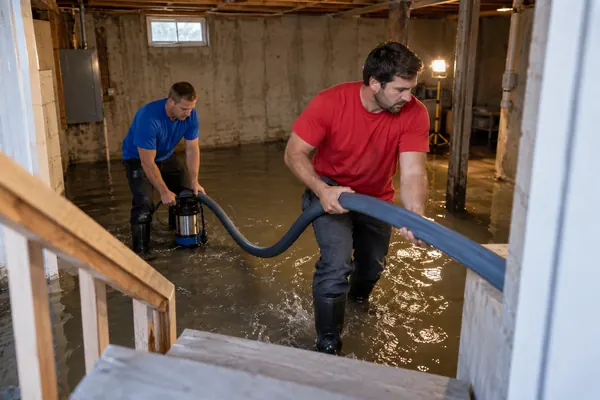
Growth can begin within 24 to 72 hours on wet materials. It starts as freckles and spreads into patches. That is why the first few days after a flood or a sewer backup count the most. What you do in that window decides whether you have a cleanup or a mold job.
Why Queens basements are prone
Concrete block and brick walls pull water from the ground and hold it. A cellar in East Elmhurst may feel dry in winter and damp in summer, when humid air meets cool walls. Add a storm that floods the floor or a sewer backup that soaks the drywall, and the conditions are ideal.
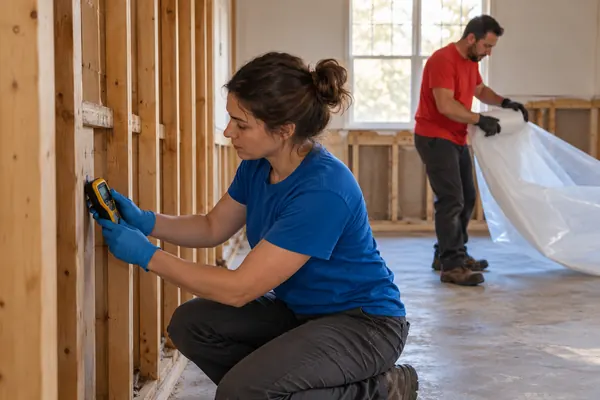
Finished basements make it harder to see. Paneling and drywall cover the wall, and carpet sits on a floor that may never fully dry. Mold grows behind them for weeks before you smell it. We open the base of a wall during an inspection and often find it.
What to look and smell for
Mold can be black, green, white or gray. It often looks like fuzzy patches or dark dots. A musty, earthy smell is a sign, even when you cannot see it. Peeling paint, stained walls, warped baseboards and condensation on cold surfaces point to moisture.
If you have allergies or asthma and your symptoms improve when you leave the house, that is a clue. We are not doctors and cannot diagnose. If someone in your home has health concerns, talk to a physician and keep them away from the area during cleanup.
What not to do
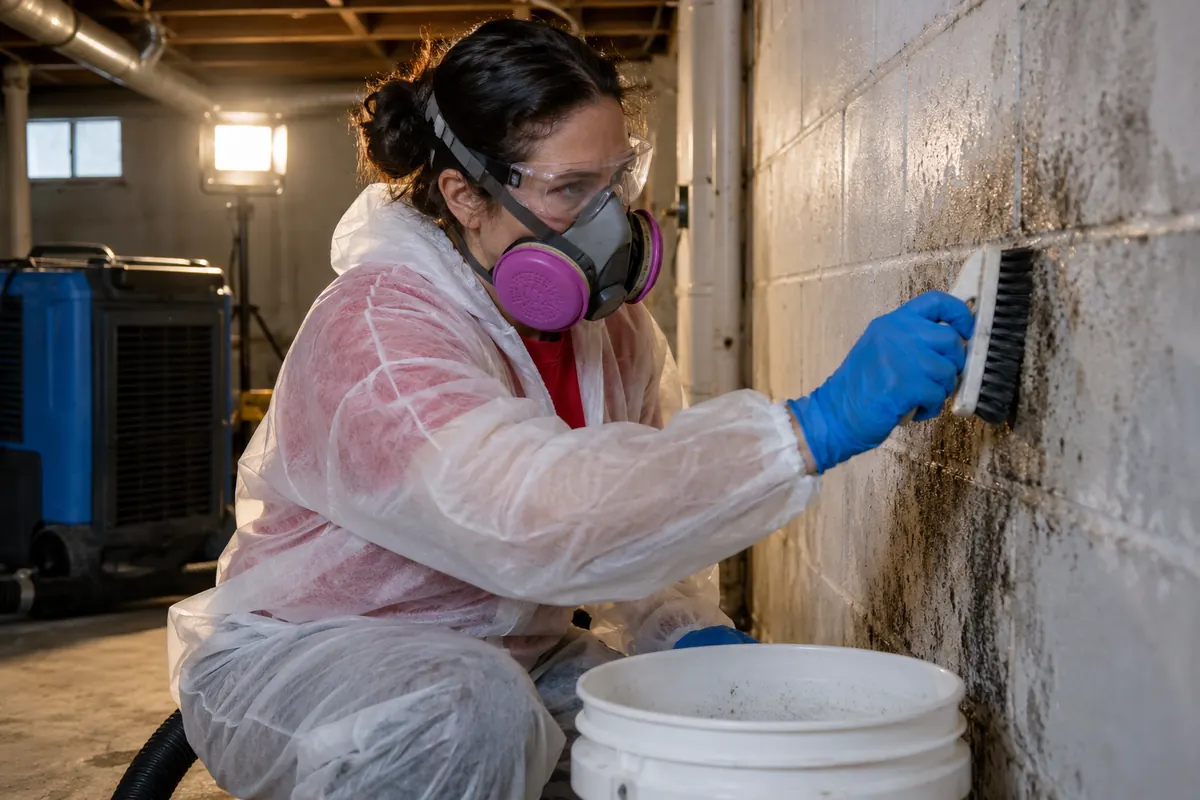
Do not scrub dry mold with a brush or blow a fan on it. That puts spores in the air and spreads them through the house. Do not paint over it, since the paint hides growth but does not stop it. Do not rely on bleach for porous materials. It may lighten the color but does not reach the roots in drywall or wood.
Turn off the central heating and cooling fan if the mold is near a return vent. Stay out of the area if you have health concerns. Take photos and call us. We will look and tell you what we see.
How removal works
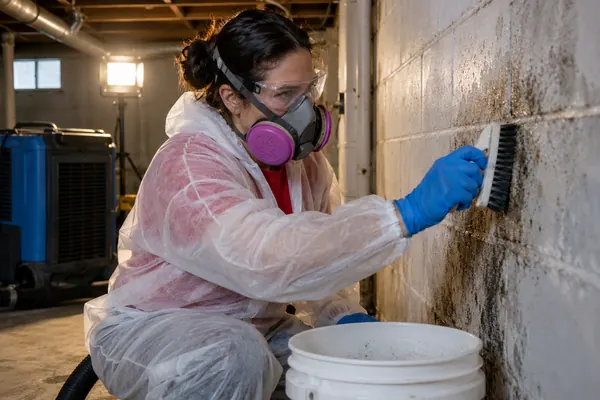
Our mold remediation crew finds the moisture first, then seals the area with plastic and uses negative air so spores do not drift. Workers wear respirators and suits. Infested drywall, insulation and carpet are cut out and bagged, and framing is cleaned. HEPA vacuums and air scrubbers clean the air and surfaces.
Then we dry the space with dehumidifiers and air movers and take readings. If the moisture source is still there, mold will come back, so we point out the cause. See our mold removal page for local causes and cost ranges for different jobs.
Preventing it next time
Dry fast. If water gets in, call within the first day and ask for drying equipment, not just a wet vac. Keep stored items off the floor and on plastic shelves. Run a dehumidifier in the cellar in summer and keep humidity under about 50 percent. Fix leaks and clear gutters and leaders so water drains away from the walls.
Insurance may limit mold coverage, and often covers it only when it follows a covered water loss. Read our post on insurance and water damage in New York and see how our basement flooding cleanup service dries the space after a flood.
Renters and shared spaces
If you rent a cellar or ground-floor unit, report moisture and mold to the landlord in writing as soon as you see it, and keep photos. In a two-family house the cellar is often shared, so what grows there affects both floors. Do not move wet boxes into the living space. Ask the owner when the source will be repaired, since removal without repair is a short-term fix. Our crew can scope the work with the owner and tell each party what we found.
Quick answers
Can I clean small mold spots myself?
A small patch of surface mold on a hard surface can be cleaned with detergent and water while wearing gloves and a mask. Anything on drywall, insulation or larger than a few square feet needs a crew.
Do I need a mold test?
Not always. If you see or smell it, treatment is the same. Testing helps for a sale or a claim, and an independent tester has no stake in the work.
How long does removal take?
A small area takes a day or two. A full cellar can take a week with drying. We give you a schedule after we see it.
Will mold make me sick?
Mold can irritate the nose, throat and lungs and affect people with asthma or allergies. Talk to a doctor about symptoms.